Music Education at Odyssey
Real instruments. Real exploration. Real musicians.
Our Approach
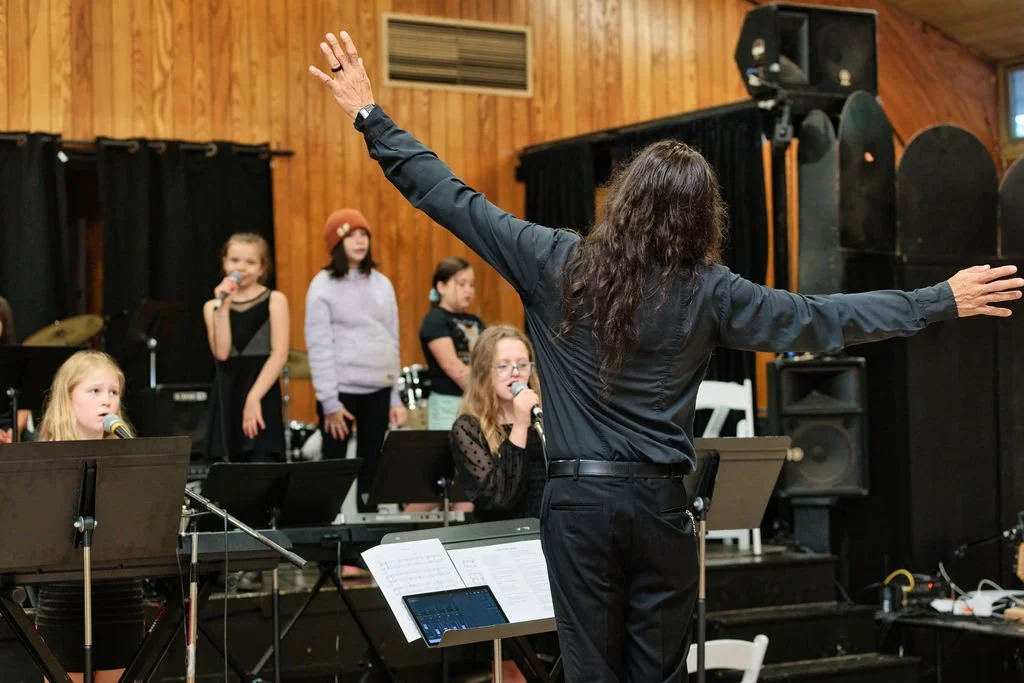
The Odyssey music program is led by Agustín Palomo Ramos, who has spent the past five years developing a PreK–12 curriculum modeled on the priorities of serious musical training: instrumentalism first, literacy throughout, and real professional experience woven in from the start.
The foundation is exploration, joy, and technical excellence in equal measure. From their first days in PreK through graduation, students have access to professional-grade instruments and a fully-equipped recording studio. They learn to read music, develop technical proficiency across multiple instruments, and shape their own musical journey through repertoire they help select. What begins with three-year-olds exploring sounds on a full-size electric bass evolves into high schoolers recording original work, creating music beds for radio, and understanding how sound functions in the professional world — from broadcasting to production to live performance.
The program is highly individualized; students arrive with all levels of experience, from none at all to years of study, and all of them are met where they are. No one sits on the sidelines because they've never played before; no one coasts because they already have.
Our Facility
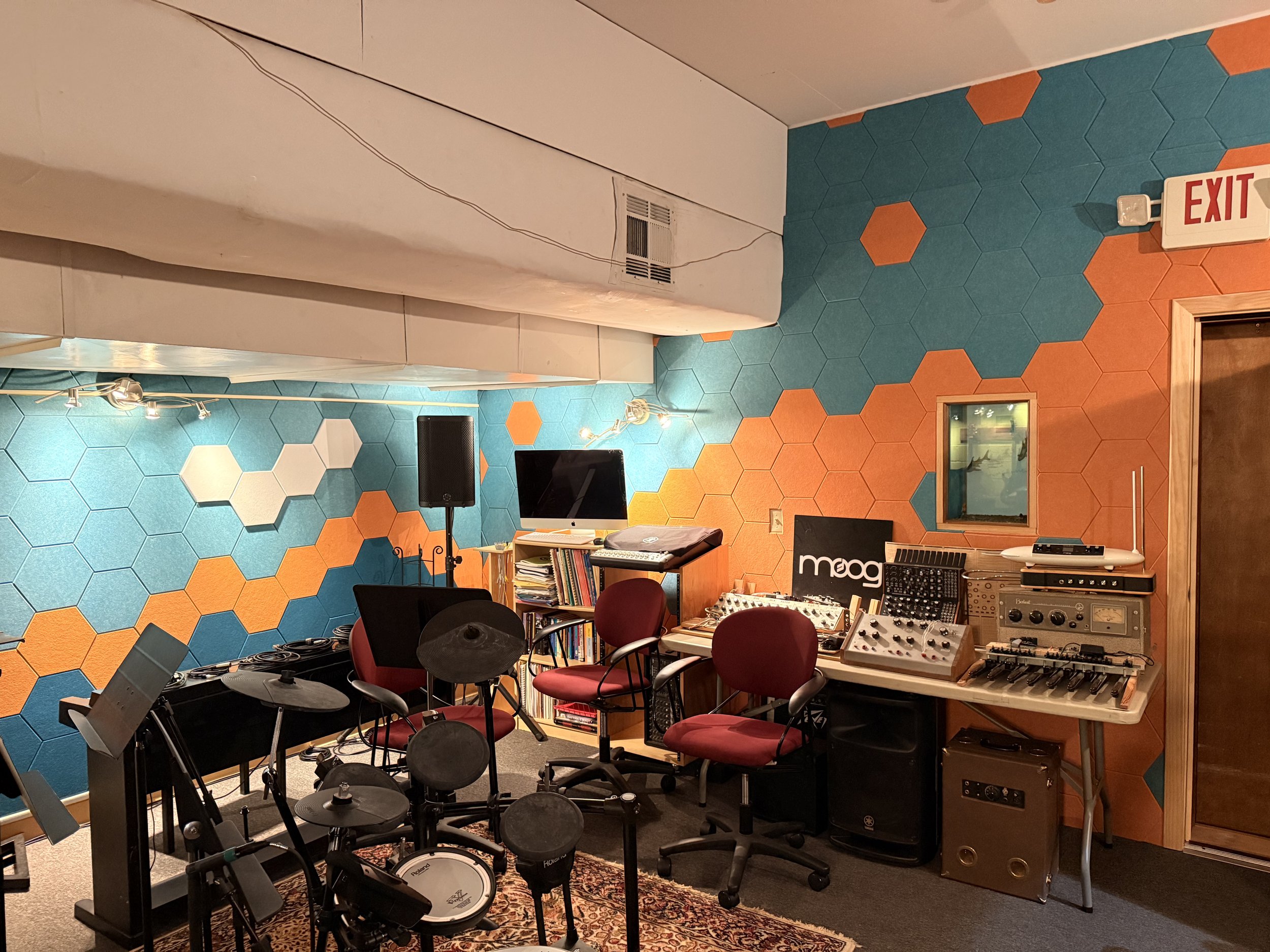
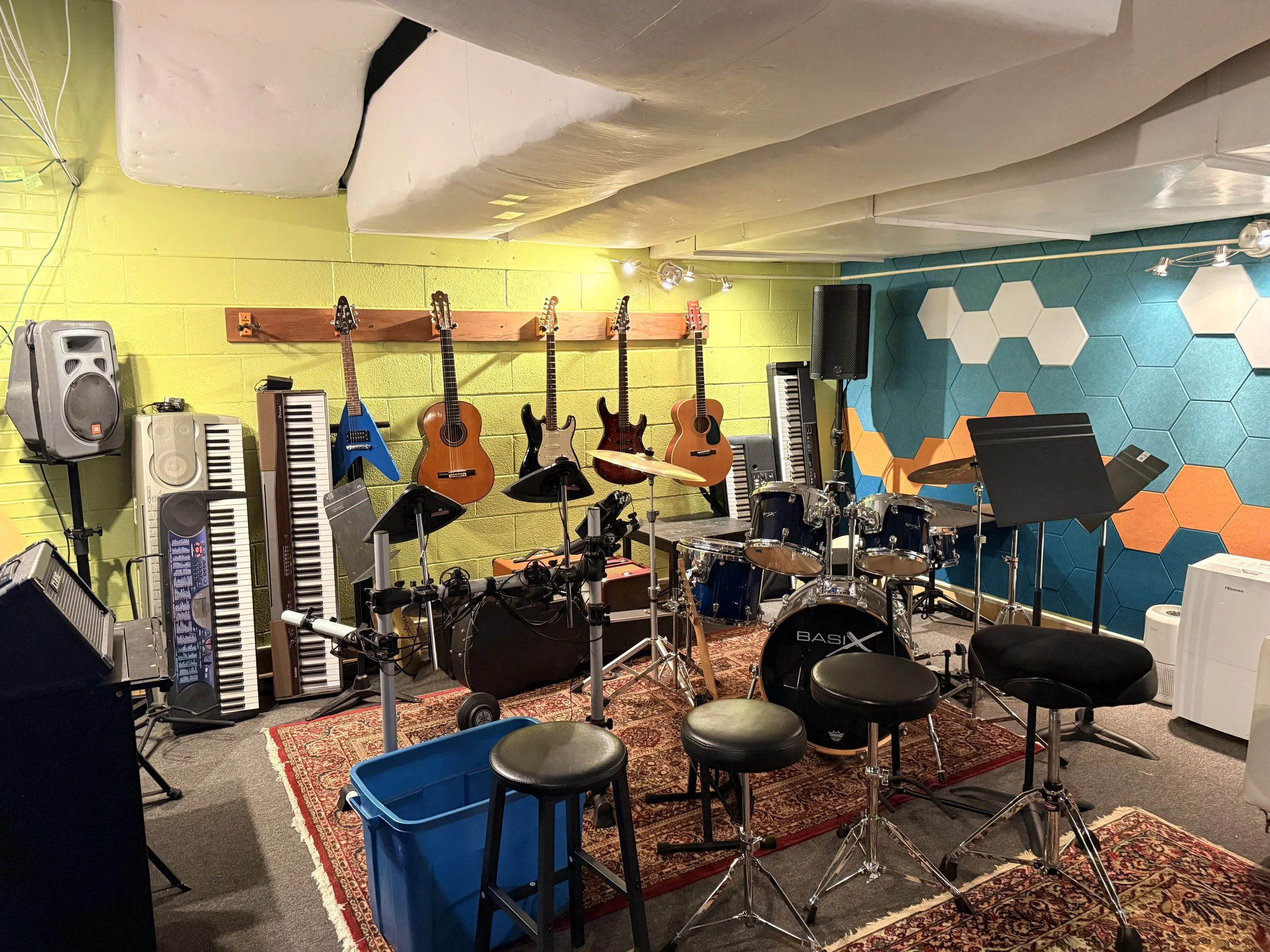
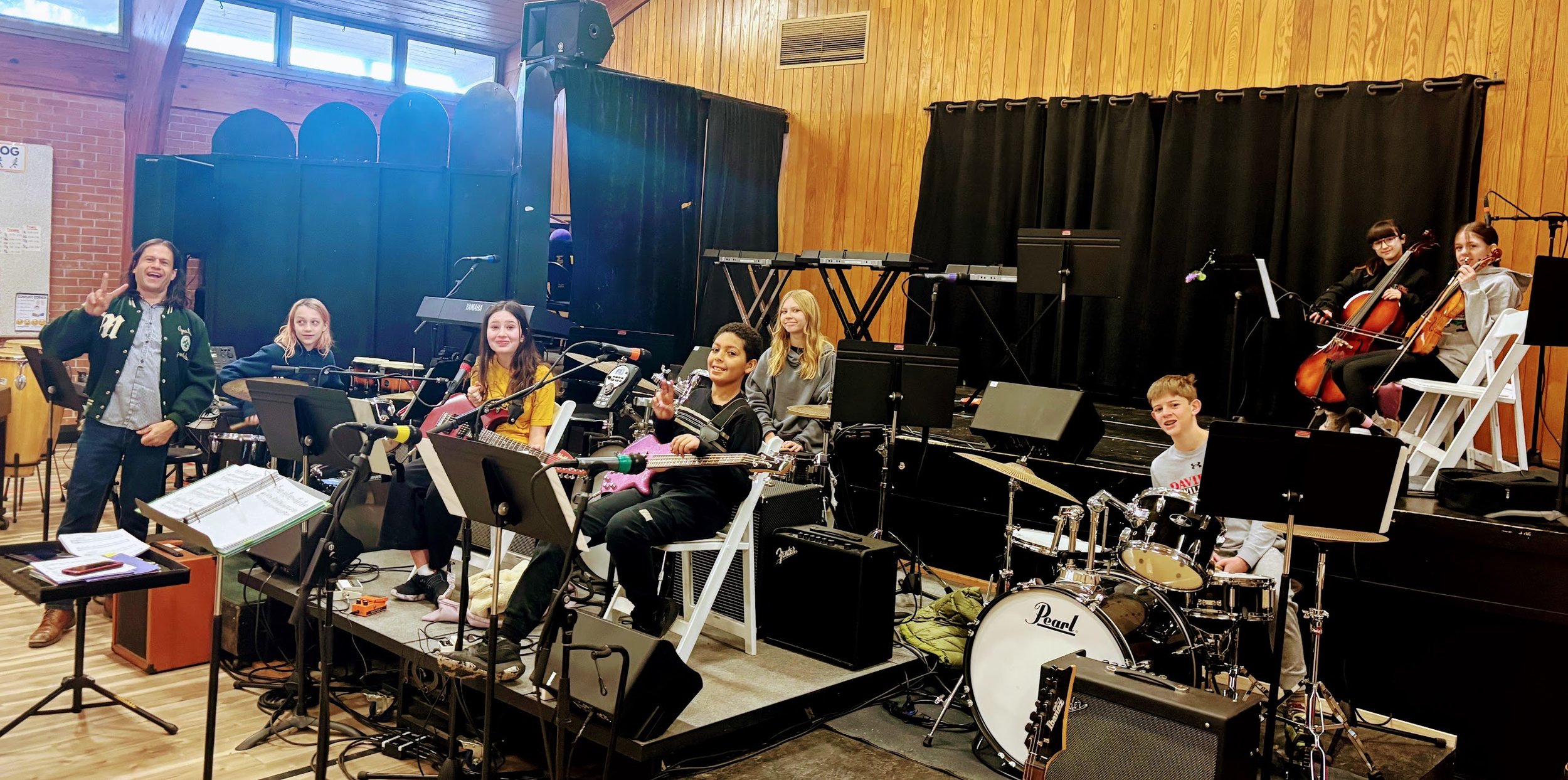
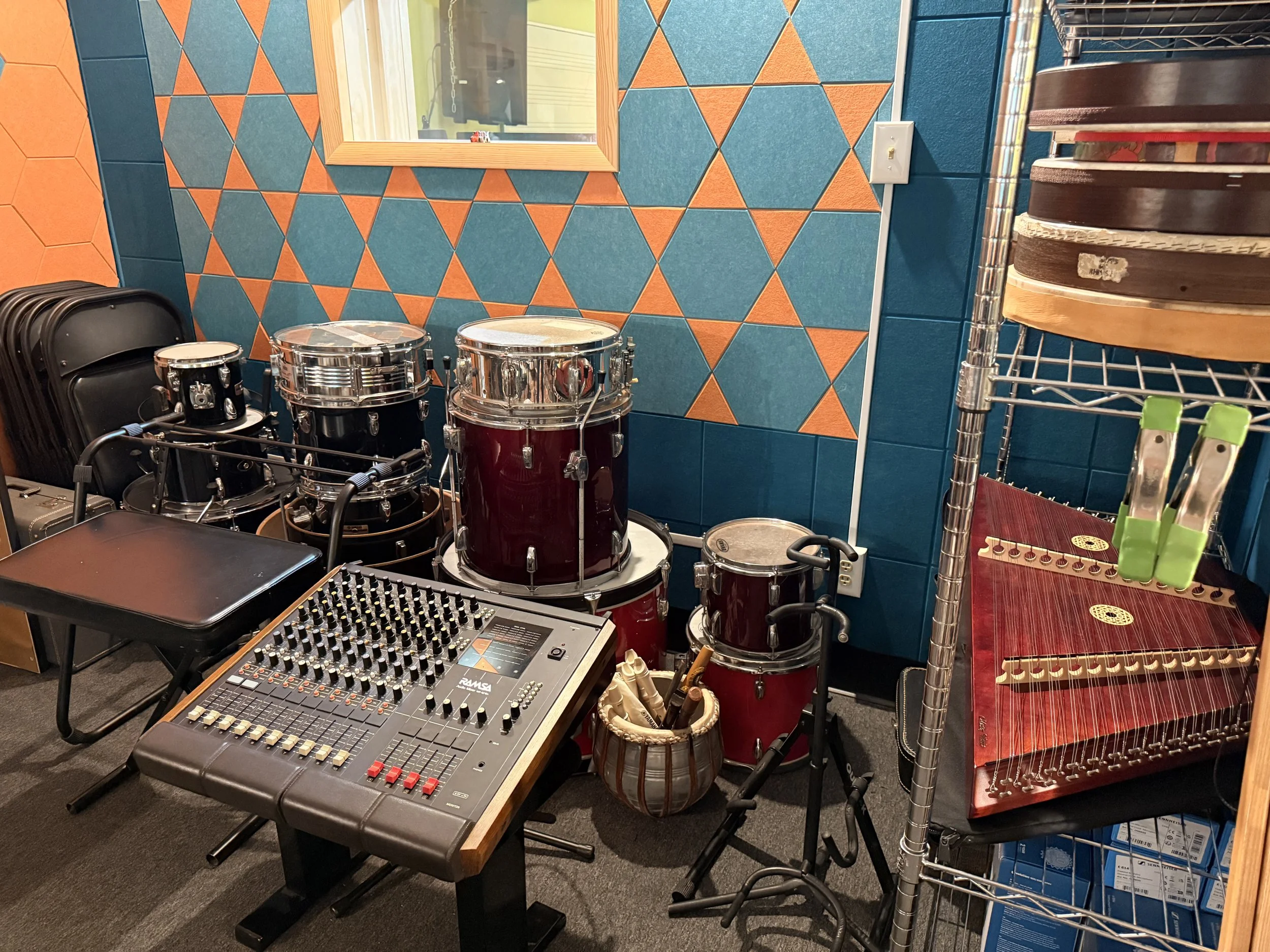
Our music studio is equipped with professional instruments spanning all categories—acoustic and electric guitars, bass guitars, drum kits, piano and keyboards, orchestral percussion, brass and woodwind instruments, string instruments, and electronic music equipment including synthesizers and MIDI controllers. The space includes two isolation booths and professional recording capabilities, allowing students to move from live performance to recorded production. Everything is real, professional-grade equipment. Three-year-olds hold the same instruments that high schoolers use to record finished tracks—no toy versions, just the actual tools of music-making.
About our Music Director
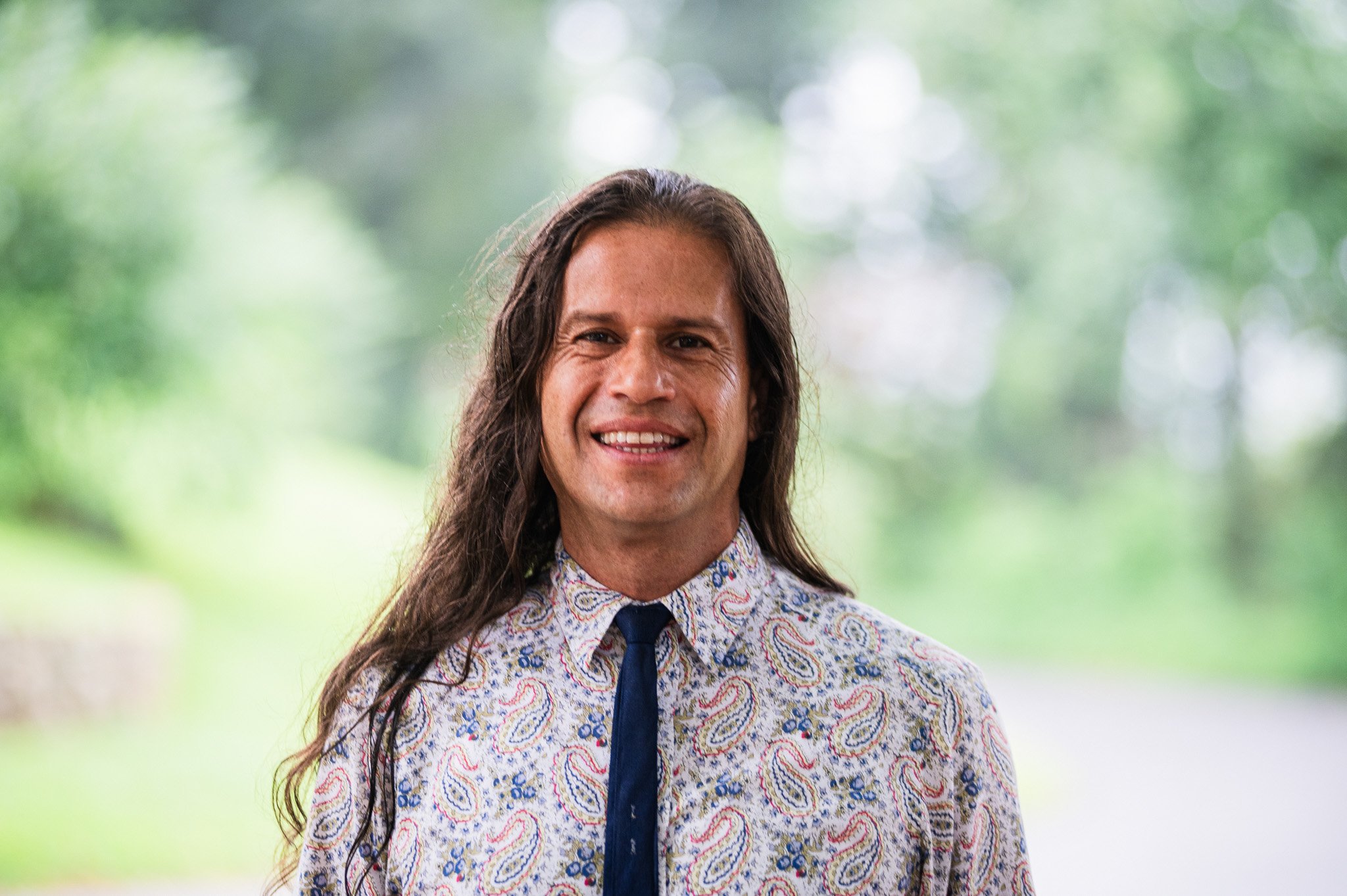
Odyssey's music program is what it is because of who leads it. Agustín Palomo Ramos is a national and international performing artist, recording musician, live sound engineer, and educator whose career spans concert halls, recording studios, and broadcast venues across the country. That breadth is not incidental to what students experience here — it is the curriculum.
Bio
Agustín Palomo Ramos is the Director of Music and PreK-12th music teacher at Odyssey Community School in Asheville. Agustín is a national and international musical artist born in San Jose, Costa Rica. He earned a degree in Education & Social Behavioral Sciences from the University of Central Florida (UCF), and later attended Florida State University for Jazz Studies. He is a lifetime member of the IATSE (International Alliance of Theatrical Stage Employees) union, Asheville chapter #278. He has been a Qualified Professional in North Carolina and has over 20 years of experience working with the IDD (Intellectual and Developmental Disabilities) community.
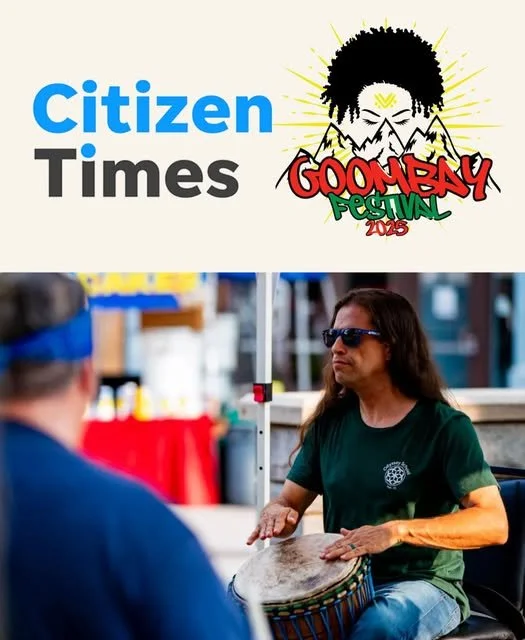
As a drummer and percussionist he performs, tours, and is a recording artist with his bands. Agustin is currently featured in the original rock band ExciterBox, who have a newly released album. He plays with Zabumba, a Brazilian drumline and dance troupe based in Asheville, NC. Some past ensembles include the 1995 Madison Scouts Drum & Bugle Corps and Walt Disney World (3 ensembles). He has also played in several orchestras/symphonies, concert bands, percussion ensembles, steel drum bands, jazz bands, marching bands, percussion for theater productions and many pop/rock bands.
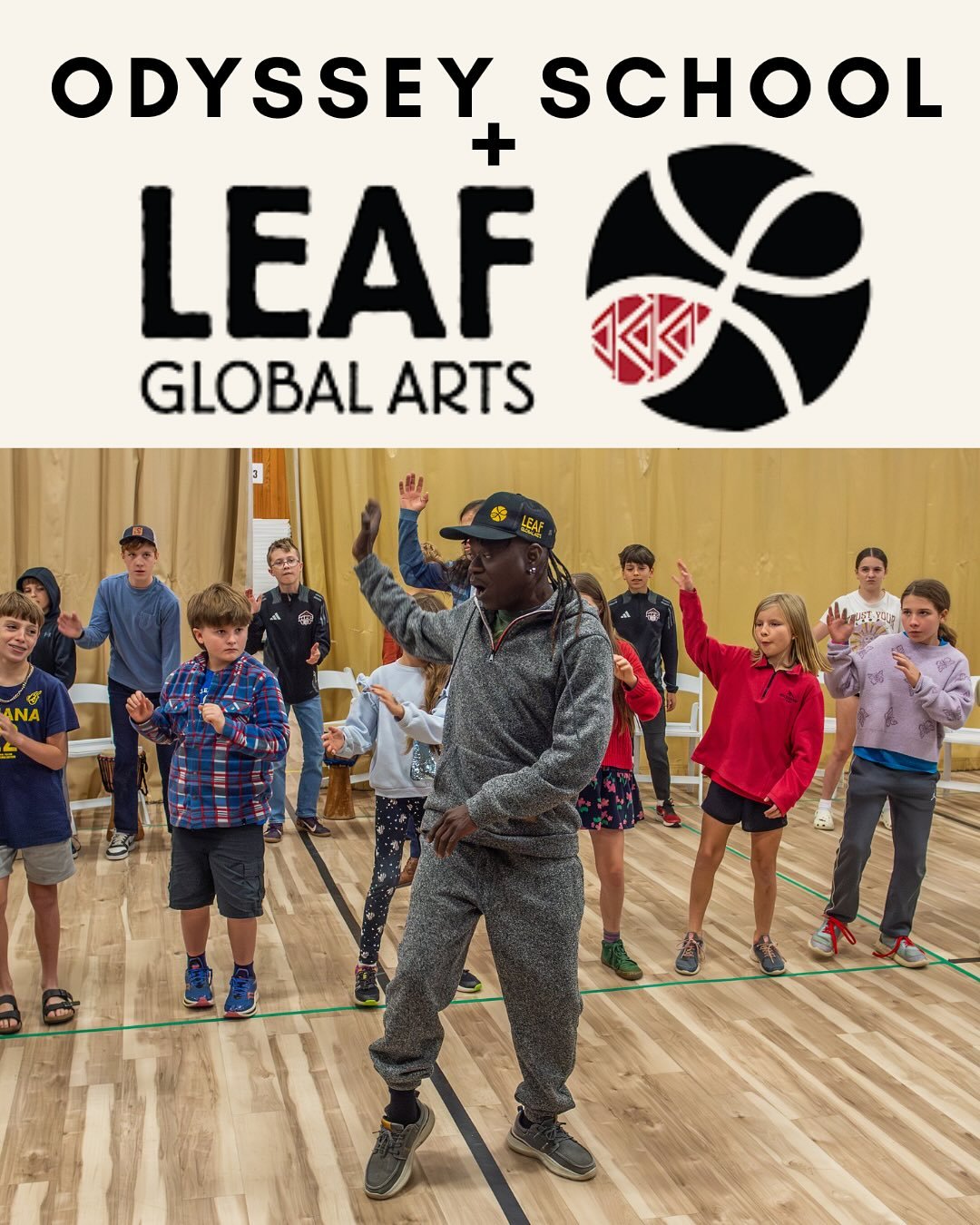
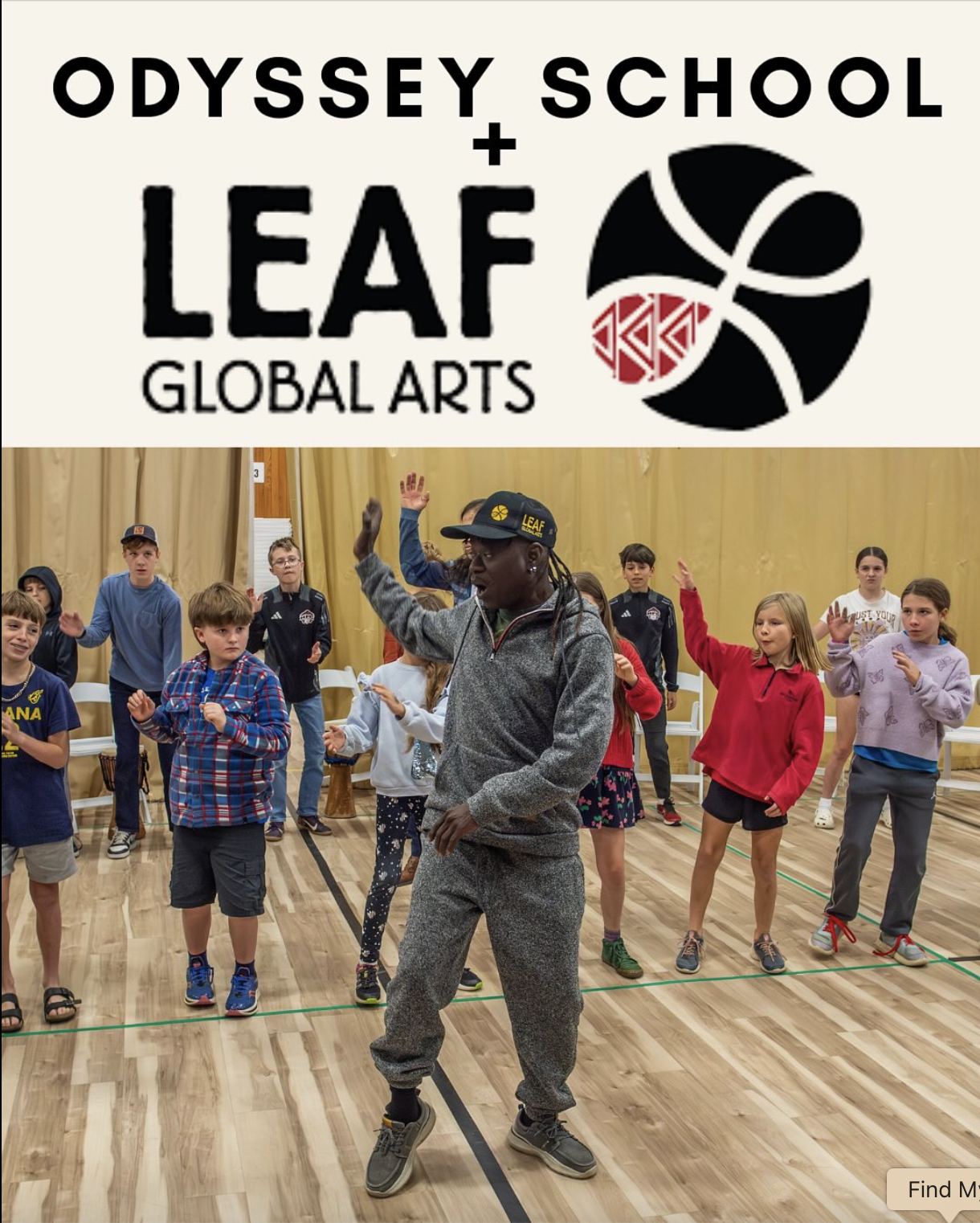
Since 2021, he has been the music teacher at Odyssey Community School in Asheville NC for pre-kindergarten through high school students. He is a resident teaching artist at LEAF Global Arts (Schools & Streets program) in Asheville, NC. His music pedagogy work has included Winter Park and Trinity high schools in Florida, The Austin Waldorf School in Texas, and as a percussion master class clinician at festivals and conventions. He arranged and composed for Appalachian State University, UCF, Wake Forest, and high schools.
Agustín is also a live event producer and a sound mixing engineer whose Front of House/Monitor A1 work can be heard with XL Live Media USA, IATSE, local production companies and independently. Some of his past crews in Austin, TX include the Bass Concert Hall, Erwin Center, and numerous events (Broadway Across America with The Phantom of the Opera, Wicked, Mama Mia!, Jersey Boys, The Lion King, Katy Perry, Lady Gaga, Taylor Swift, George Strait, John Meyer, Neil Young, George Clinton & The Parliament Funkadelic, SXSW, Austin City Limits, Santana, Willie Nelson, Blueman Group, Tom Petty, and Deadmau5). In New York City his credits include work at Studio Instrument Rentals (SIR), Rocket Studios, and more (Fiona Apple, Beyonce, Trey Anastasio, LL Cool J, My Chemical Romance, Burning Spear and The Foo Fighters).
The Early Years
Exploration as Foundation: Pre-K - Grade 2
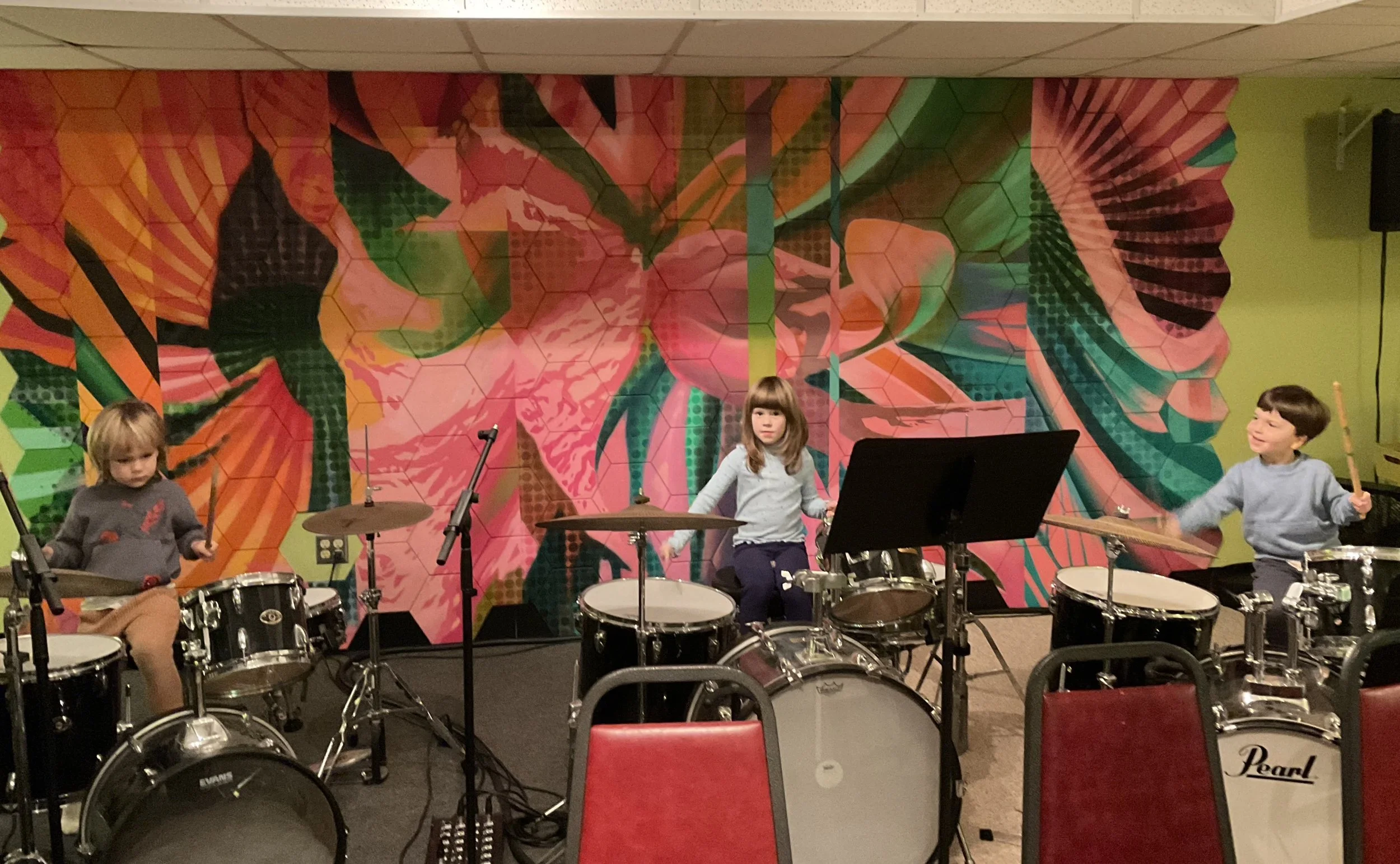
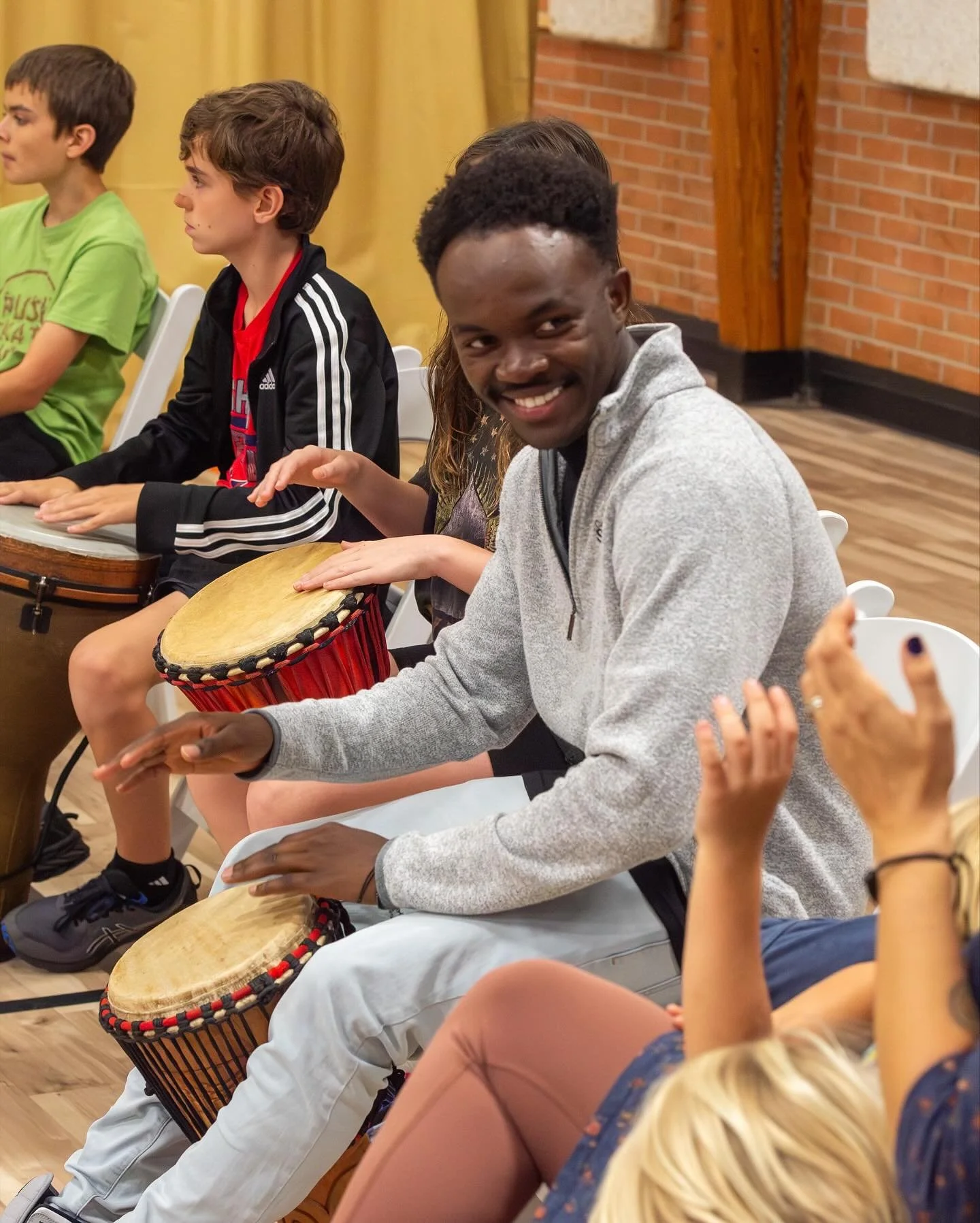
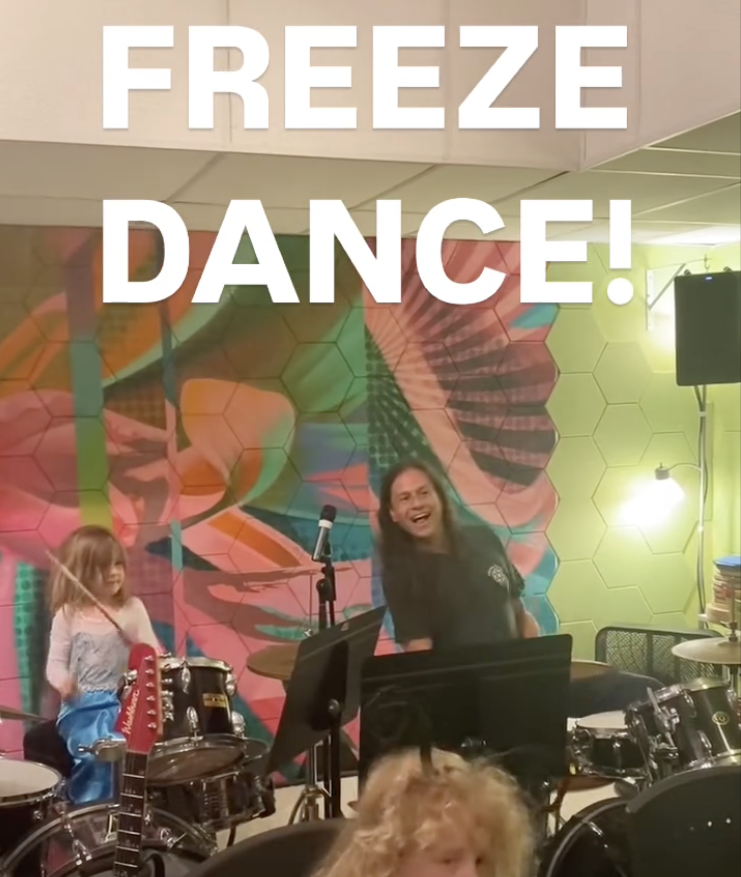
Every music class begins with Explore Time—dedicated periods where students move freely through the studio, trying any instrument that catches their attention. A three-year-old might point to a drum kit on a high shelf and say, "I want to play that," and Augustine brings it down, shows them how to hold it safely, and lets them discover what sounds they can make. Underneath this joyful exploration runs rigorous music literacy instruction: students learn to read notation, understand rhythm, and connect what they see on the page to what they hear and play. By second grade, many students have found instruments they connect with deeply and have developed real proficiency through consistent practice.
The Middle Years
Choice Meets Structure: Grades 3 - 8
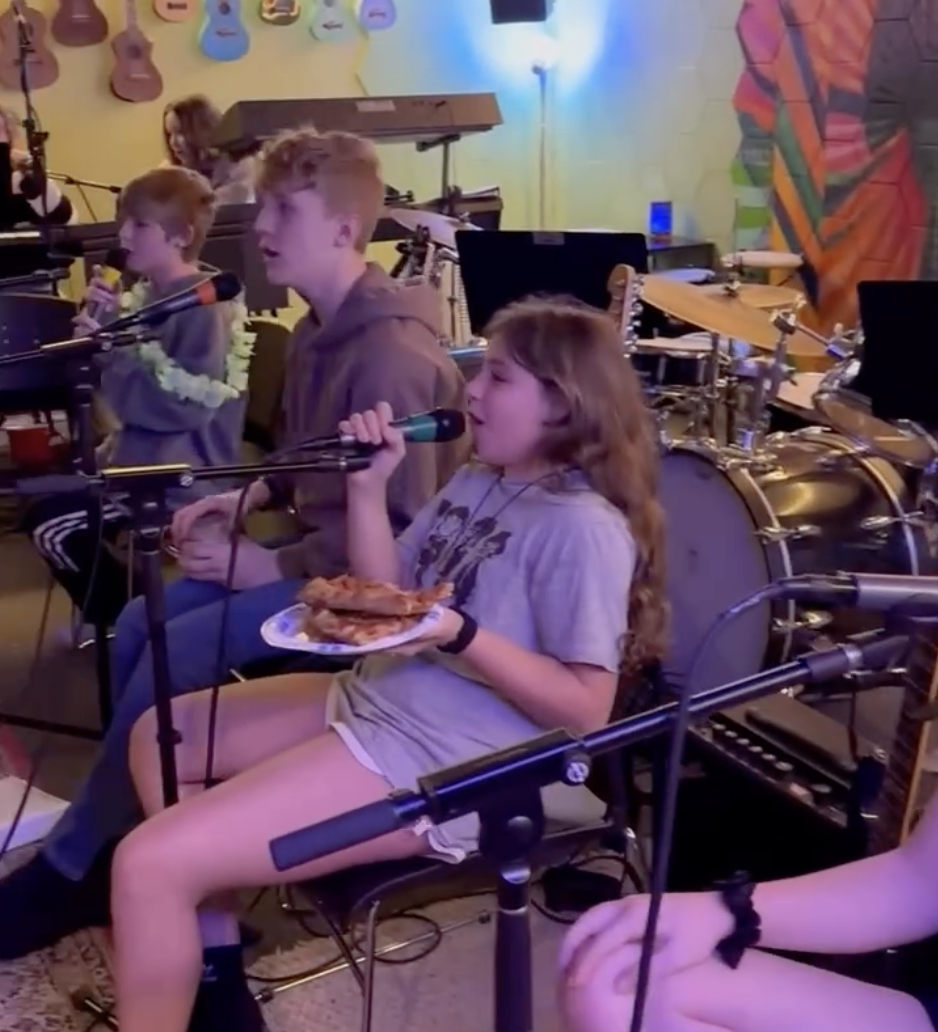
Around third and fourth grade, students begin actively shaping what the class plays. They propose songs they love, discuss music in different contexts, and learn to think critically about appropriateness for various audiences. The class might decide together to learn "Burning Down the House" by Talking Heads, or students might request "Umbrella" by Rihanna. Music becomes a required class meeting twice weekly in middle school, reflecting the growing complexity of the work. Students take on more sophisticated repertoire, deepen their technical skills, and develop strong ensemble abilities—learning to listen while playing, balance volumes, and support each other's musical lines. Many become multi-instrumentalists, moving fluidly between piano, guitar, drums, and other instruments as pieces require.
High School Pathway
Professional Perspectives: Grades 9 - 12
High school students can specialize in music through the Music & Performance Arts Pathway, which shifts the program from general music education to professional preparation. Pathway students continue developing their instrumental and vocal skills, but the curriculum expands to include the full landscape of music-related work. Augustin leverages his experience as both a performing musician and sound engineer to connect classroom learning with professional contexts, giving students access to his network and expertise in the Asheville music community.
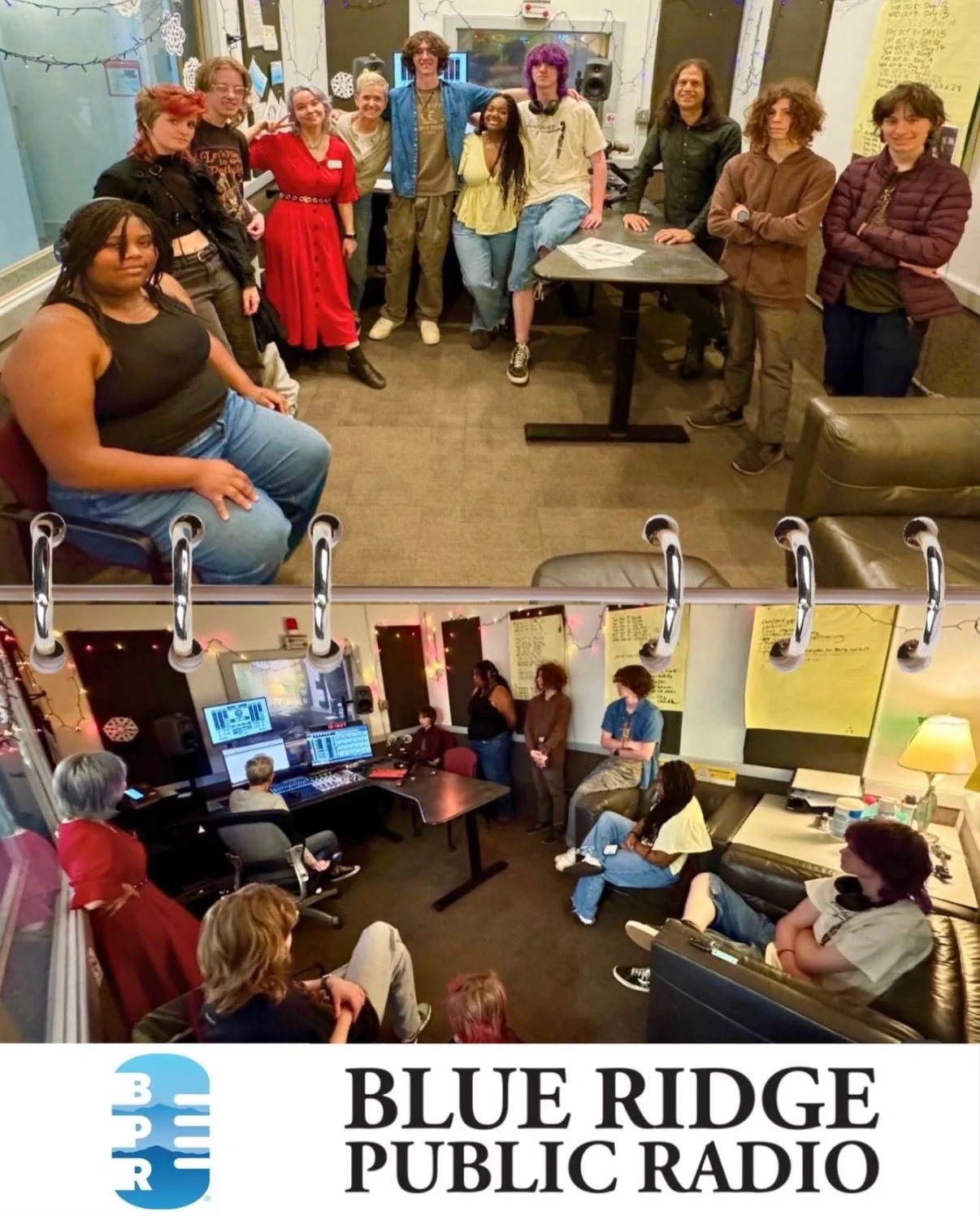
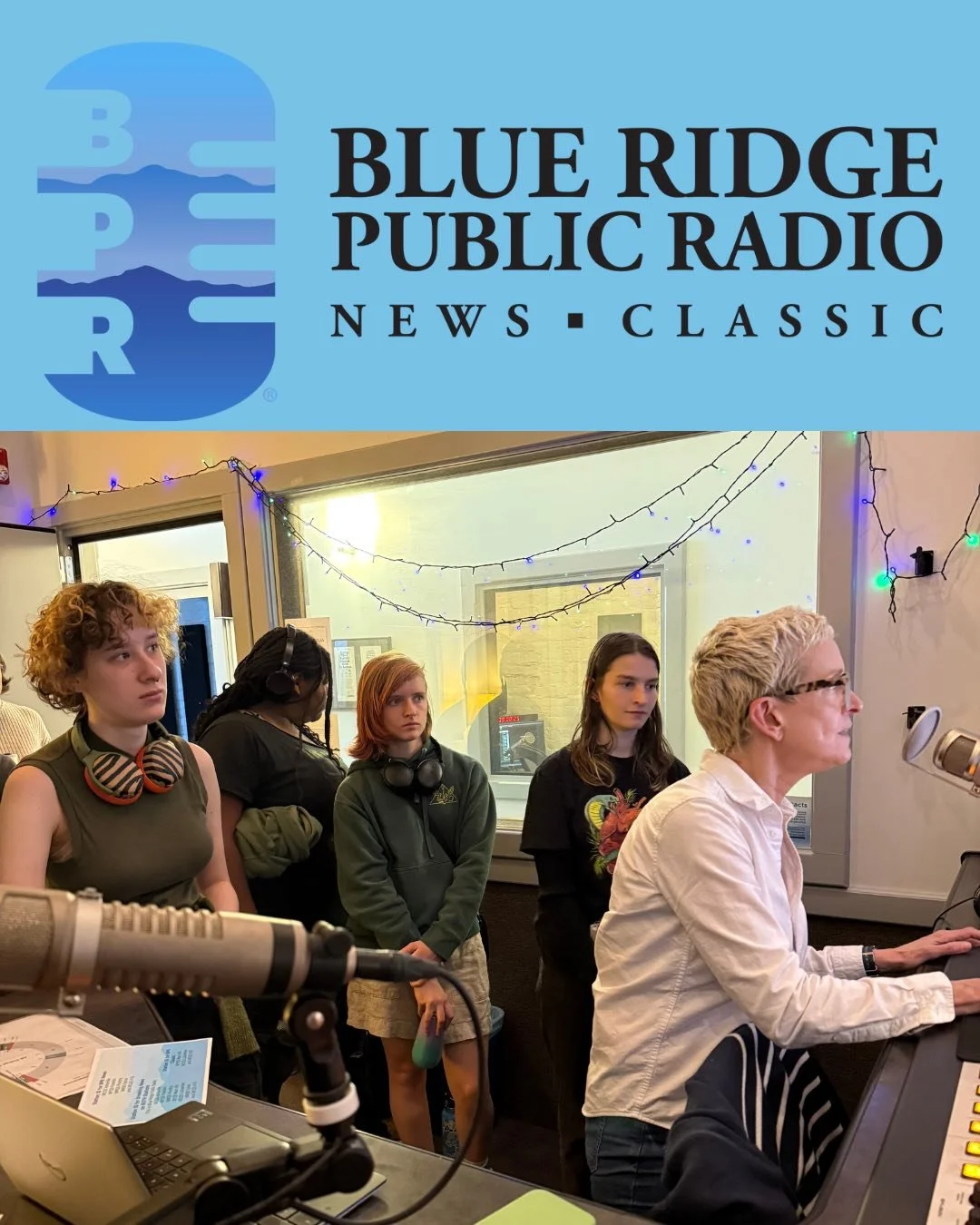
The pathway includes carefully curated real-world experiences. Students visit professional recording studios to observe commercial music production. They go to Blue Ridge Public Radio during live broadcasts, learning how radio production works and creating their own music beds—the brief instrumental pieces that play underneath announcements and between segments. They attend Asheville Symphony Orchestra performances and discuss classical music careers. In our own studio, they work extensively with recording equipment, moving from live performance to finished recorded tracks, learning the technical side of music production alongside their artistic development.
These experiences aren't about pushing students toward music careers—though some do pursue music professionally. The pathway helps students understand music as both art form and technical craft, giving them concrete knowledge about how sound functions across industries: performance, recording, production, broadcasting, live sound engineering, and media integration. Students leave with sophisticated performance skills, hands-on production experience, and the ability to engage with music from multiple perspectives, whether they continue with music or carry these skills into other fields.
Mini-mester
Every year, after winter break our high schoolers get to pause their regularly scheduled programming and dive into what we call “Minimester.” During this time, they get to pick an intensive program that they do for the whole day, every day, for two weeks.
Minimester each year includes a band option, open to all high school students regardless of whether they're in the Music & Performance Arts Pathway. This two-week intensive format allows students to dive deeply into ensemble work, often forming groups and working toward a final performance.
The Minimester band gives students in other pathways—visual art, materiality, academics—a chance to engage seriously with music even if it's not their primary focus. It also creates opportunities for more experimental or ambitious projects that might not fit into the regular curriculum structure. The compressed timeframe and intensive daily rehearsal schedule mirror professional music experiences like festivals or recording sessions.
Music News
Curious? Come on a tour and see what sets us apart.
We would love to answer all of your questions and help you learn if Odyssey is right for your family. Fill out our tour inquiry form and we’ll find the time that’s right for you.