Our mission is to prepare our students, families, and educators to lead lives of intention and purpose with an authentic sense of self.

The Integral Model at Odyssey
Odyssey Community School was founded in 2007 on a model called Integral Education—a framework that recognizes every learner as a whole, interconnected being. Integral Education grows from the philosophy of Holism: intellect, emotion, body, and spirit are inseparable. Education is not about filling compartments of knowledge, but cultivating awareness, connection, and purpose.
At Odyssey, Integral Education shapes everything we do. Drawing from insights like Howard Gardner's Theory of Multiple Intelligences, students grow not just as scholars, but as curious, compassionate humans. Learning here is alive: reflective, relational, creative, and responsive to the complexity of the world.
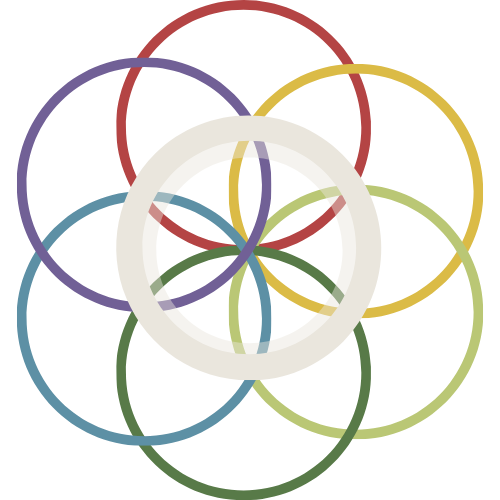
We bring these ideas to life through the Six Strands of Growth—Moral, Mental, Emotional, Physical, Aesthetic, and Spiritual. These aren't separate subjects, but interwoven threads: a science lesson that sparks awe and ethical curiosity; a classroom play that strengthens confidence and empathy; a history lesson that becomes reflective writing and a food tasting; a math challenge that invites persistence and joy.
Each strand informs the others, creating dynamic balance between knowing, doing, and being. This integrative approach helps students develop durable skills—self-awareness, collaboration, creativity, moral imagination—that last far beyond their years at Odyssey.
When learning engages the whole person, it endures. The Six Strands are both our framework and our promise: growth is never one-dimensional, and every student, in every strand of their being, matters.
The Six Strands
Aesthetic
Helps students grow their imagination and sense of beauty. They learn to express ideas through art, movement, and design, and to notice the beauty in patterns within the world around them.
Emotional
Supports children in understanding and communicating their feelings. It helps them build empathy, self-awareness, and the ability to stay connected even in moments of challenge.
Mental
Strengthens curiosity and clarity of thought. Students practice learning deeply, thinking critically, and applying knowledge in meaningful ways.
Moral
Encourages a sense of belonging and responsibility within the wider community of life. Students learn to act with integrity, kindness, and awareness of how their choices affect others and the world.
Physical
Celebrates the body as an essential part of learning. Movement, play, and care for health help students build confidence, focus, and respect for their own physical being. A multi-sensory approach to learning emphasizes how the brain learns best, especially for neurodiverse learners.
Spiritual
Invites reflection, imagination, and connection to something larger than oneself. Students explore what gives their life meaning and learn to live with purpose and heart.
What does this look like in action?
Teacher-driven curricula
Odyssey teachers design their own curricula, guided by the Six Strands and in collaboration with colleagues. Their work is rooted in expertise, creativity, and deep understanding of their students. Without the pressure of teaching to a test, our teachers unfold learning in ways that are fearless, dynamic, and fun—activating the Mental Strand through rigorous content, the Aesthetic Strand through creative design, and the Spiritual Strand by helping students discover what makes them come alive.
Social-Emotional Learning
Through classroom meetings, reflective practice, and Compassionate Communication, students develop the Emotional Strand by building self-awareness and empathy. The Moral Strand deepens as they learn to navigate conflict with dignity and understand their impact on others. Because they feel safe and respected, they have space to take intellectual risks, think deeply, and learn with their whole selves.
Beyond “Arts Integration”
The arts aren't an add-on or just an elective. The Aesthetic Strand weaves equally through all subjects—whether in science, writing, or community service. Creativity is treated as a way of thinking that strengthens the Mental Strand, a form of expression that builds the Emotional Strand, and a practice that connects students to meaning through the Spiritual Strand.
Multi-Dimensional Learning
In Odyssey classrooms, one subject grows into many, engaging multiple strands simultaneously. A history lesson becomes creative writing (Mental and Aesthetic), then a shared meal (Physical and Moral), then a work of art (Aesthetic and Spiritual). This kind of learning sticks because it binds itself to experiences that invite empathy, reflection, and creative connection across all dimensions of being.
Restorative Justice and Positive Discipline
Rooted in dignity and accountability, our approach to community care and repair strengthens the Moral Strand by teaching responsibility and the Emotional Strand by building skills to understand impact and repair harm. Through restorative circles and positive discipline, students learn to take ownership of their choices and strengthen the community they help create.
Shared Responsibility
Students take an active role in shaping their classrooms and community, developing the Moral Strand through stewardship and the Emotional Strand through collaboration. They help set agreements, solve problems, and care for shared spaces—learning that accountability and respect grow together.
Independent Research Projects
Independent Research Projects (IRPs) activate all six strands: the Mental Strand through investigation and critical thinking, the Emotional Strand through confidence-building and vulnerability, the Physical Strand through presentation skills, the Aesthetic Strand through creative expression of findings, the Moral Strand through choosing meaningful topics, and the Spiritual Strand by following what genuinely sparks curiosity. Students learn to think rather than just absorb, and develop the grit to trust their ability to figure out what isn't already known.
Bright staff, actualized graduates
When teachers are trusted and supported, they bring their whole selves to their work—modeling what it means to integrate all six strands in a life of purpose. Our graduates leave with the whole-person capacities they need to live meaningful, balanced, and resilient lives.
Our Commitment to Equity
Odyssey Community School’s Board of Trustees, administration, faculty, parents, and students are committed to creating a culture of equity in our classrooms and in our community.
Equity is defined as a quality of being both fair and just. Serving equitably is distinct from serving equally, which instead implies that all are treated the same regardless of circumstance, need, or context. In order to strive for equitable practices, we first recognize that inequity is built into the fabric of our society. Just as our goal is to teach individual students at their optimal rate of challenge, the same is true for welcoming all members of our community and honoring their lived experience.
We recognize and aim to correct the historically segregative role that independent schools have played and can play in education. We also acknowledge that there is no one perfect way to achieve equity, but we are dedicated to striving for best practices and are willing to take risks because there is much work to do. Similarly, we recognize that our society, in general, is challenged to overcome a complex web of inequities and our community strives to correct these inequities attributed to racism, sexism, homophobia, and classism. Racial, gender, and wealth equity is a lens through which Odyssey Community School aims to conduct all of its work.
Together with you, we hope to build a community that prioritizes equity, as well as reflects and celebrates the diversity of the human experience.
Curious? Come on a tour and see what sets us apart.
We would love to answer all of your questions and help you learn if Odyssey is right for your family. Fill out our tour inquiry form and we’ll find the time that’s right for you.