Kindergarten at Odyssey
Kindergarten at Odyssey is a year-long journey from home to the world and back again. Students begin by exploring the mountains that shape our region—learning how they formed, who has lived here, and the stories they hold. From this grounded beginning, they travel through Ancient Eurasia, building the Great Wall of China in our Play Frame, painting with henna patterns inspired by India, and working with Egyptian hieroglyphs. They celebrate cultures around the world and learn about heroes who used their voices to create change—from Dr. Martin Luther King Jr. to Malala Yousafzai. Along the way, they're learning to read and write, count and measure, make tea from garden herbs, perform mythology plays, and ask research questions about topics that fascinate them.
Our work is rooted in Joseph Campbell's understanding of mythology and the hero's journey. When children encounter stories from diverse cultures and traditions—and when they experience those cultures through art, building, song, and collaboration—they develop both appreciation for others and confidence in themselves. Much of our program happens through making and doing: students build Chinese homes with courtyards, paint using walnut hulls and pokeberries, act out the story of the Japanese sun goddess Amaterasu, and write letters to heroes they're studying.
Kindergarteners come to us at wildly different developmental places. Some arrive already reading; others are just beginning to recognize letters. Both thrive here because our teaching is intentionally differentiated and our curriculum rich enough to engage every learner. The integral education model that guides all our work means students are simultaneously exploring distant civilizations, mastering foundational literacy and math skills, and discovering who they are in community with others.
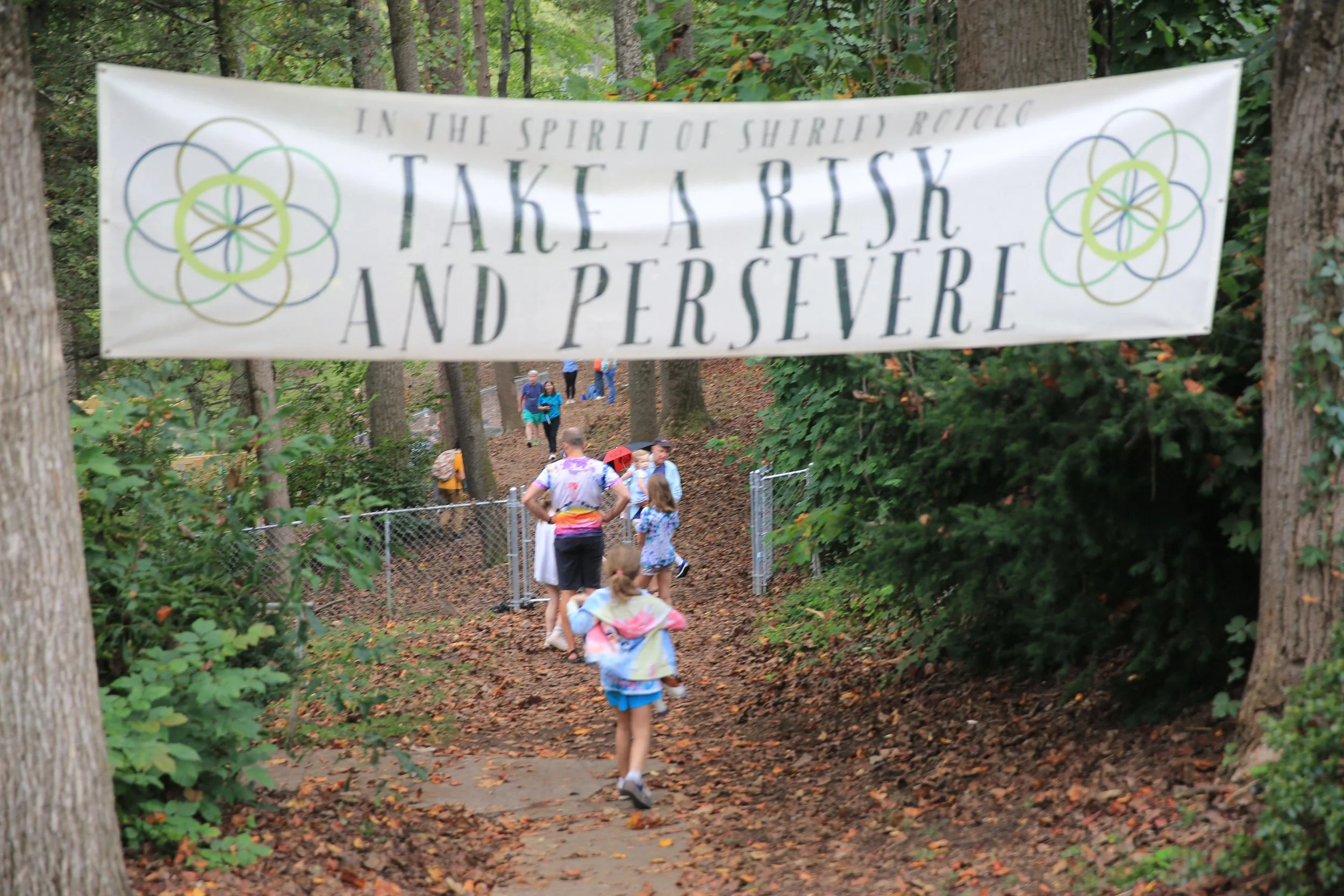
Our motto in Kindergarten captures the spirit: "Take a risk and persevere!”
Curriculum Overview
-
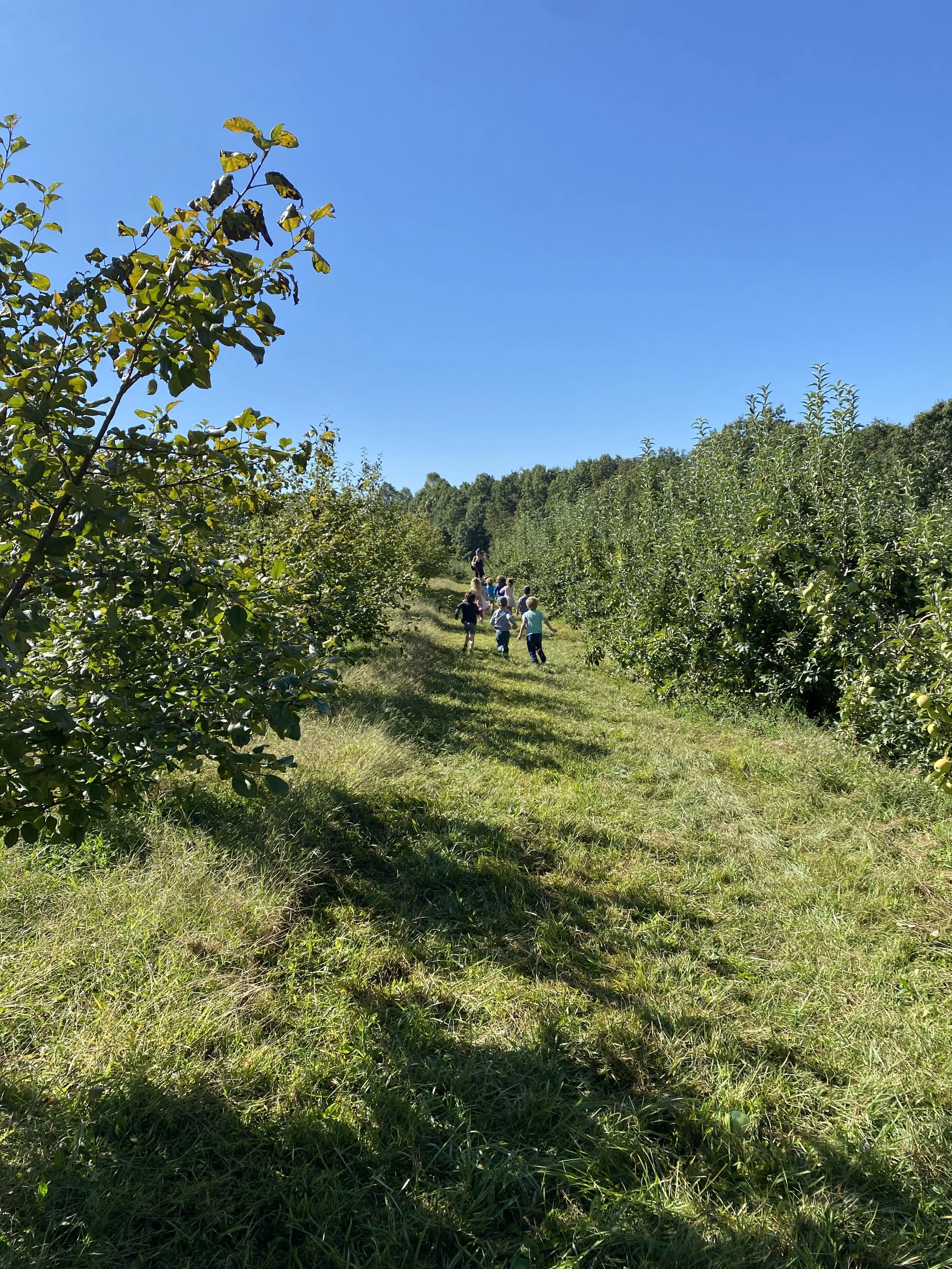
Kindergarteners begin grounded in place. Our Appalachia unit explores the mountains that shape our region—how they formed millions of years ago through tectonic plate movement, the animals we share the land with, and the people who have lived here for generations. Students learn traditional Appalachian songs like "Skip to My Lou," try their hand at fiber arts (watching wool go from sheep to spinning wheel to loom), make pottery, learn about the origin of corn and make cornbread, and hear Cherokee stories like "The First Fire" and "Healing Spirit Waters." A fall field trip to Sky Apple Orchard brings learning about pollinators and seasonal cycles to life.
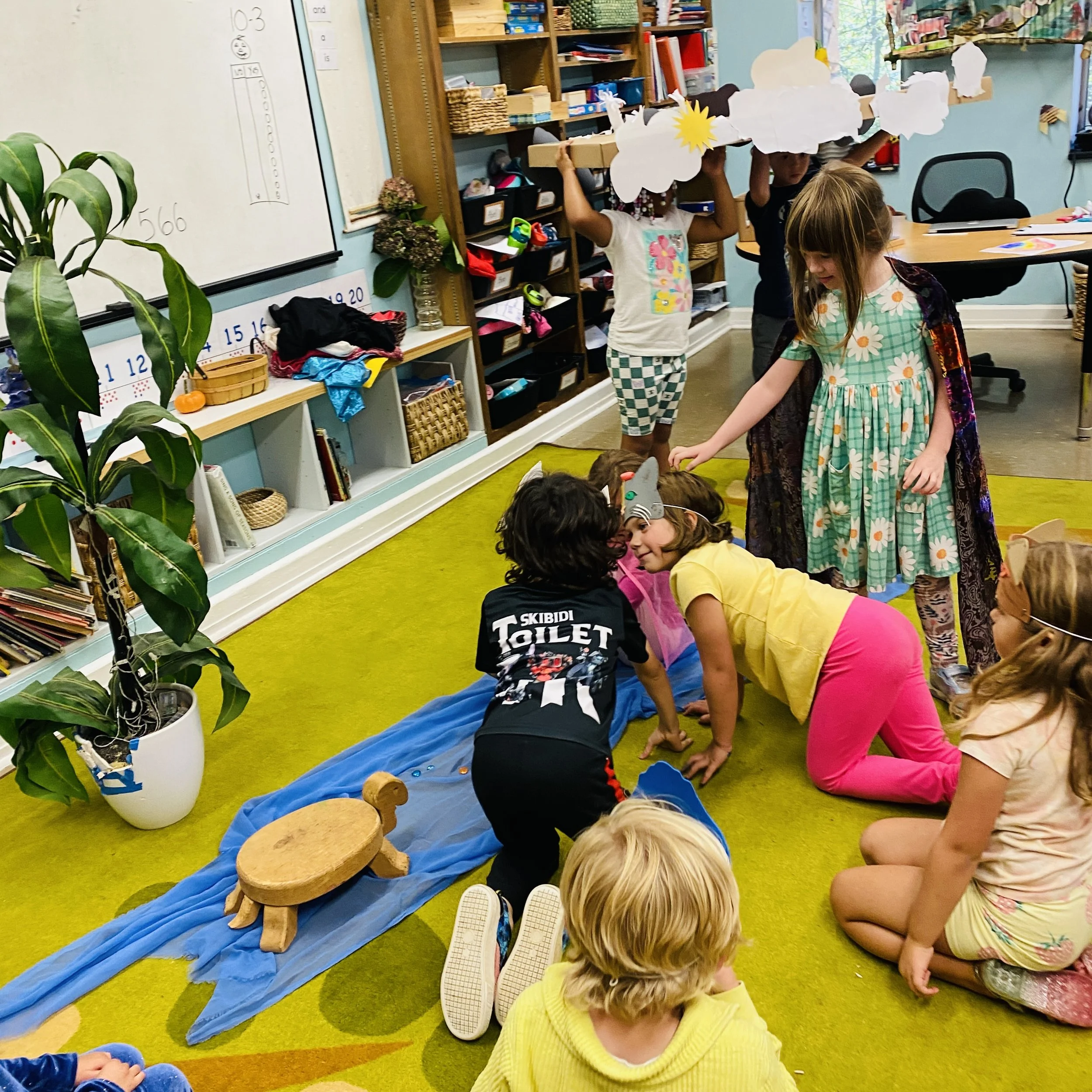
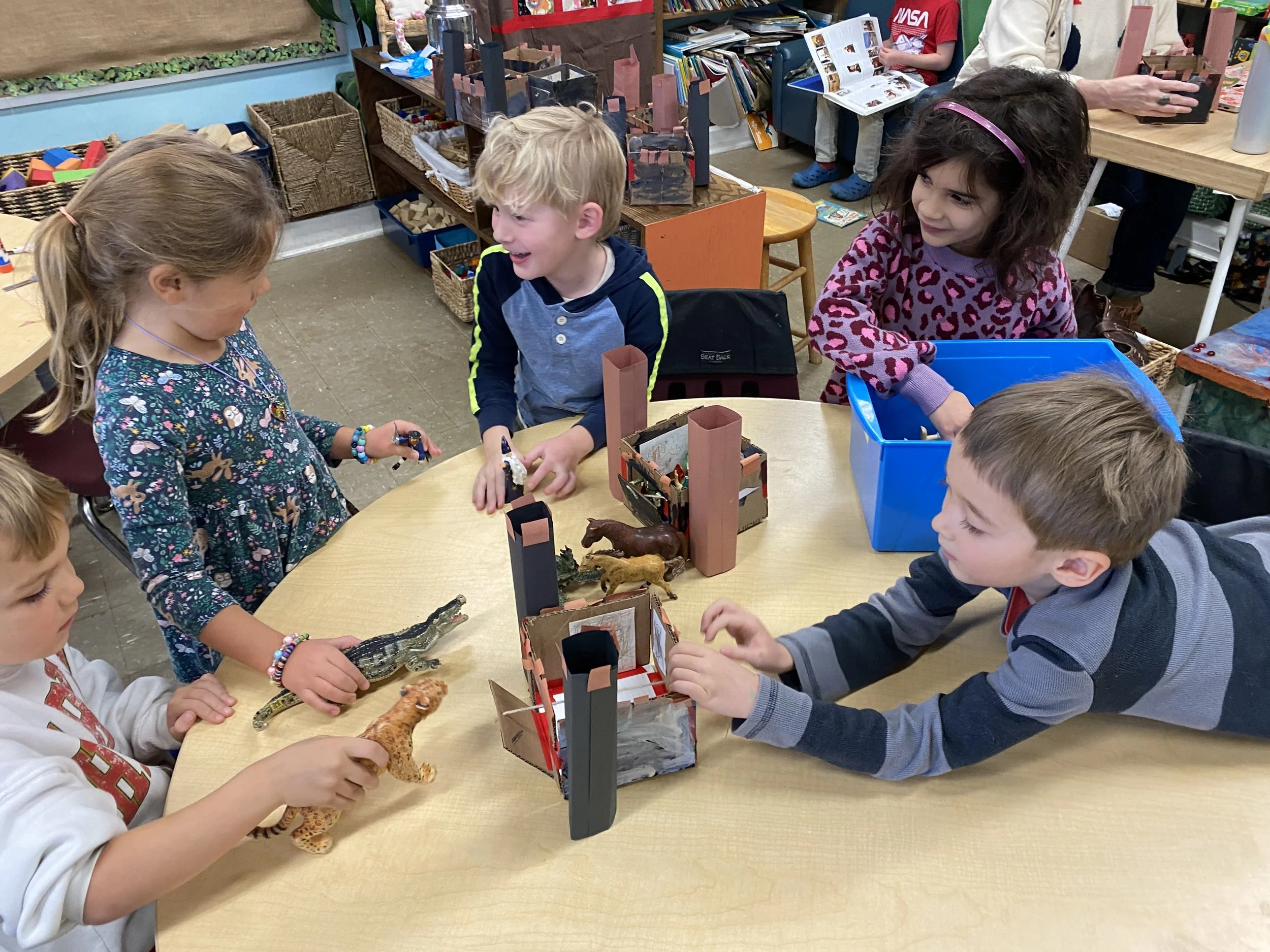
From this local foundation, kindergarteners embark on a "Tour of Ancient Eurasia." They build the Great Wall of China in our Play Frame, practice writing Chinese characters, and explore Chinese culture through stories like "Nuwa and the Broken Sky"—which they perform as a play, embodying the mythology through movement and imagination. They investigate India's monsoon season, paint with henna-inspired patterns, and make bubble drawings of Bengal tigers while learning about Durga in her nine manifestations. In Egypt, they work with hieroglyphs, learn about the Nile River's essential role in civilization, explore stories of pharaohs and mummies, and discover why pyramids fascinated ancient peoples—and still fascinate us today.
Throughout these units, parents and community members often contribute their knowledge and experience—a parent might teach phrases in a language they speak, share artifacts from their travels or heritage, or demonstrate traditional skills that connect to what students are studying. These contributions show that learning happens through relationship and that wisdom lives all around us.
In December, as days grow shortest, kindergarteners explore festivals and myths of light from around the world. They learn about Amaterasu, the Japanese sun goddess, and act out her story—discovering how important it is for the sun to rise each day. Families are invited to share their own holiday traditions—Hanukkah, Winter Solstice, Christmas, Kwanzaa, and others. The December Feast is a joyful celebration where families contribute food from the cultures we've studied, help transform our classroom, and gather together to honor months of discovery and growth. Students exchange handmade gifts with each other, practicing both the joy of creating for others and the gratitude of receiving.
As winter transitions toward spring, kindergarteners celebrate Imbolc with the story of the Goddess Brigid, continuing the year's practice of embodying mythology through performance.
In the second semester, kindergarteners turn their attention to heroes from more recent history. The book "All Are Welcome" introduces themes of justice and inclusion, and students reflect on the power of words. Through stories of Dr. Martin Luther King Jr.'s "I Have A Dream" speech, Malala Yousafzai fighting for girls' right to education, and Ruby Bridges, students explore what it means to stand up for others and work for change. They notice how these heroes used their voices to make positive change, and they write about their own hopes and dreams for humanity—even writing letters to Malala thanking her for speaking up.
From this local foundation, kindergarteners embark on a "Tour of Ancient Eurasia." They build the Great Wall of China in our Play Frame, practice writing Chinese characters, and explore Chinese culture through stories like "Nuwa and the Broken Sky"—which they perform as a play, embodying the mythology through movement and imagination. They investigate India's monsoon season, paint with henna-inspired patterns, and make bubble drawings of Bengal tigers while learning about Durga in her nine manifestations. In Egypt, they work with hieroglyphs, learn about the Nile River's essential role in civilization, explore stories of pharaohs and mummies, and discover why pyramids fascinated ancient peoples—and still fascinate us today.
Throughout these units, parents and community members often contribute their knowledge and experience—a parent might teach phrases in a language they speak, share artifacts from their travels or heritage, or demonstrate traditional skills that connect to what students are studying. These contributions show that learning happens through relationship and that wisdom lives all around us.
In December, as days grow shortest, kindergarteners explore festivals and myths of light from around the world. Families are invited to share their own holiday traditions—Hanukkah, Winter Solstice, Christmas, Kwanzaa, and others. The December Feast is a joyful celebration where families contribute food from the cultures we've studied, help transform our classroom, and gather together to honor months of discovery and growth. Students exchange handmade gifts with each other, practicing both the joy of creating for others and the gratitude of receiving.
As winter transitions toward spring, kindergarteners celebrate Imbolc with the story of the Goddess Brigid, continuing the year's practice of embodying mythology through performance.
In the second semester, kindergarteners turn their attention to heroes from more recent history. The book "All Are Welcome" introduces themes of justice and inclusion, and students reflect on the power of words. Through stories of Dr. Martin Luther King Jr.'s "I Have A Dream" speech, Malala Yousafzai fighting for girls' right to education, and Ruby Bridges, students explore what it means to stand up for others and work for change. They notice how these heroes used their voices to make positive change, and they write about their own hopes and dreams for humanity—even writing letters to Malala thanking her for speaking up.
-
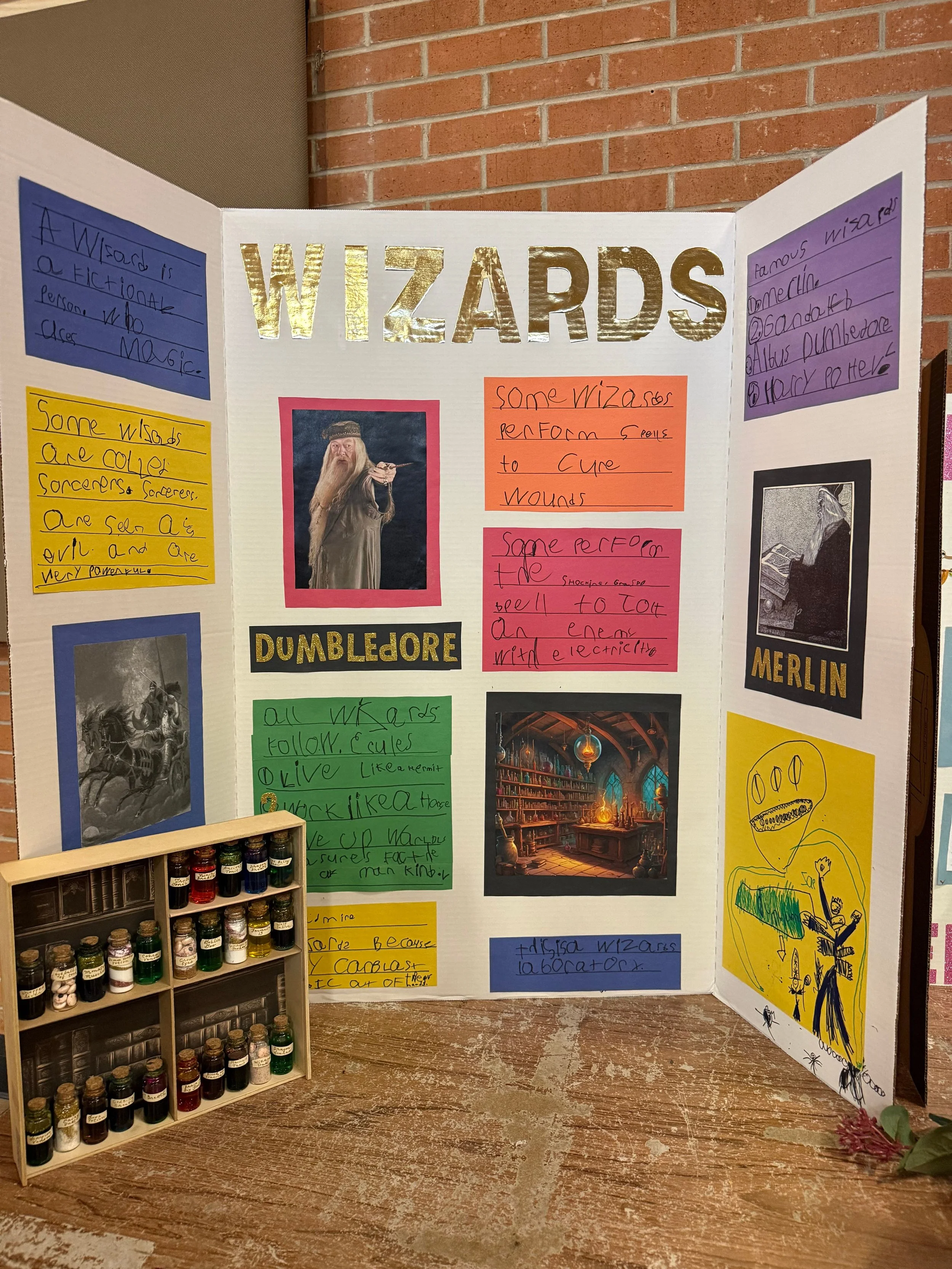
Even in kindergarten, students begin our signature Independent Research Project (IRP) program. This isn't a watered-down version of what older students do—it's a genuine research experience scaled appropriately for five and six-year-olds.
The process begins in January when kindergarteners choose research topics that fascinate them—dinosaurs, the solar system, edible plants, koalas, sharks, whatever captures their curiosity. They visit the library to gather books, generate core questions about their topics, and create Mind Maps to track what they already know. At school, they work on the research and writing components. At home, they work on creative projects that express their learning.
Students learn to extract facts from their research, write those facts on cards, and use those facts to create a simple essay. They practice reading their fact cards aloud, building confidence in public speaking. They create trifold display boards and prepare presentations that they deliver to families and the school community in March.
The IRP process is substantial but joyful. Kindergarteners show remarkable confidence as they share their knowledge and excitement for their topics. After presentations, they reflect on what was challenging, what they were proud of, and what brought them joy. It's an early introduction to the idea that they are capable researchers and thinkers whose interests and questions matter.
-
Academic skills develop in context, not in isolation. As kindergarteners learn about mountain formation, they're also mastering letter sounds and numeral formation. When they explore Egyptian pyramids, they're learning about three-dimensional shapes. Writing practice happens through "inventive spelling" of sentences about the Great Wall or the River Nile—taking risks with new sounds while teachers provide support that meets each child where they are.
Literacy:
Our kindergarten program uses UFLI Foundations, the same structured, research-based approach to phonics used throughout our elementary school. This curriculum, rooted in the Science of Reading, explicitly teaches students how to decode and spell words while nurturing a genuine love of reading and writing.
Students learn to recognize voiced versus unvoiced sounds (does your throat vibrate when you make the sound, or is it just air flowing?), practice "tapping" fingers to blend sounds together and read simple words and stories, and build a collection of "heart words"—high-frequency words like "the," "I," "and," and "said" that appear often in reading. By spring, kindergarteners are reading simple books, writing sentences with inventive spelling, and developing confidence as readers and writers.
Mathematics:
We practice experiential math, encouraging learners to problem-solve using a variety of strategies. Math is hands-on, playful, and grounded in real-world contexts that make sense to five- and six-year-old minds.
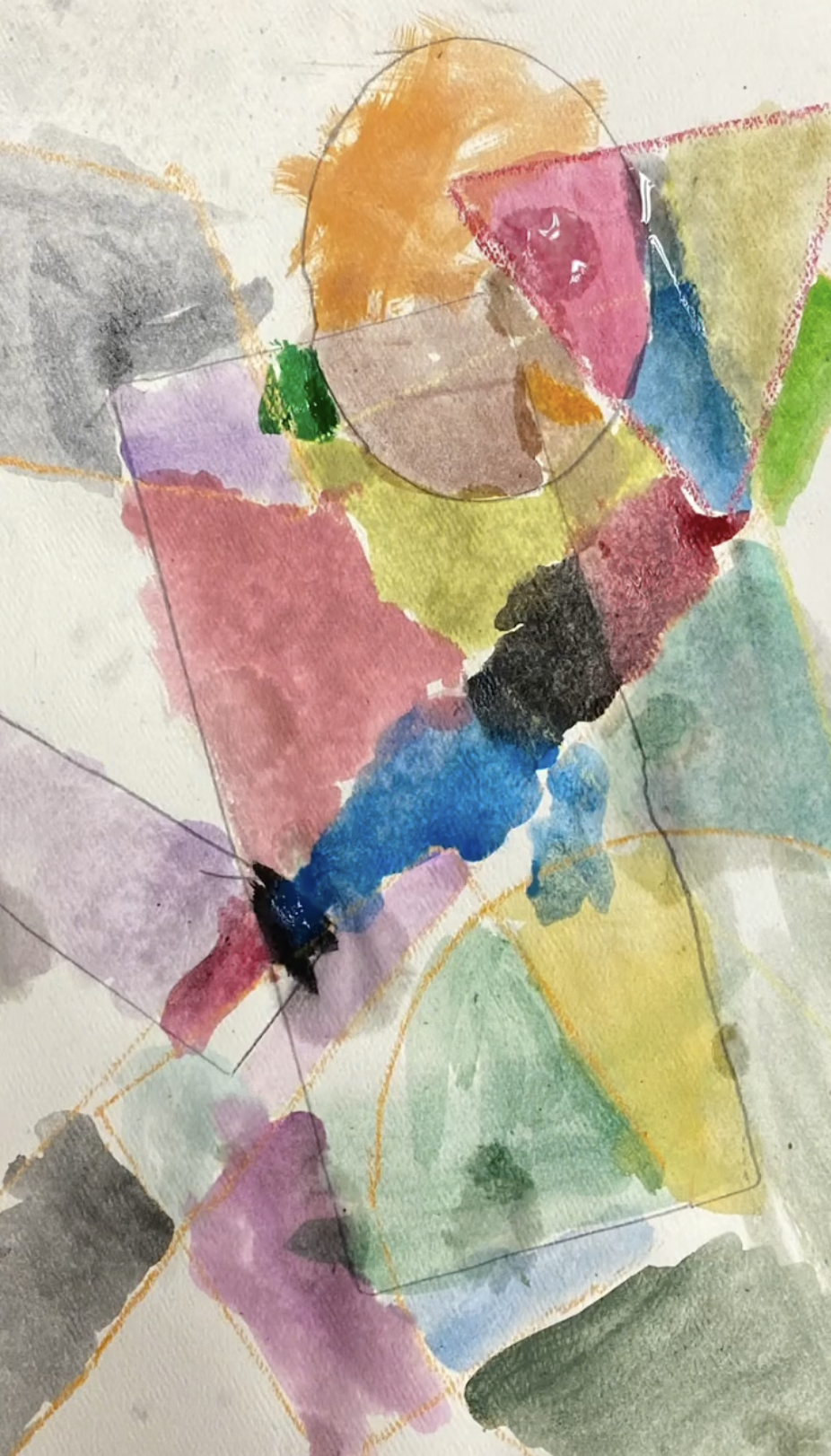
Students work with manipulatives, practice numeral formation, count objects in different configurations, create graphs and use tally marks, explore measurement concepts like "greater than/less than" and length and width, make sets of tens and practice counting by tens (and later by fives and twos), work with addition story math, and explore two and three-dimensional shapes. In spring, they investigate shapes through the lens of art, looking at Kandinsky's work and getting inspired to create their own geometric compositions.
-
Our beautiful wooded playground is a daily destination. Kindergarteners spend time outside every day, observing seasonal changes (the shift from green to gold, the crunch of fallen leaves, the first frost), playing freely, and connecting with nature in all weather.
The natural world is woven throughout our curriculum. In the fall, students explore how mountains form through tectonic plate movement, learning the geology of the Appalachian range that shapes our home. They investigate native animals—turtles, foxes, and others—considering what habitats provide for creatures to thrive. A field trip to Sky Apple Orchard brings learning about pollinators, seasonal cycles, and the lifecycle of bees into direct experience.
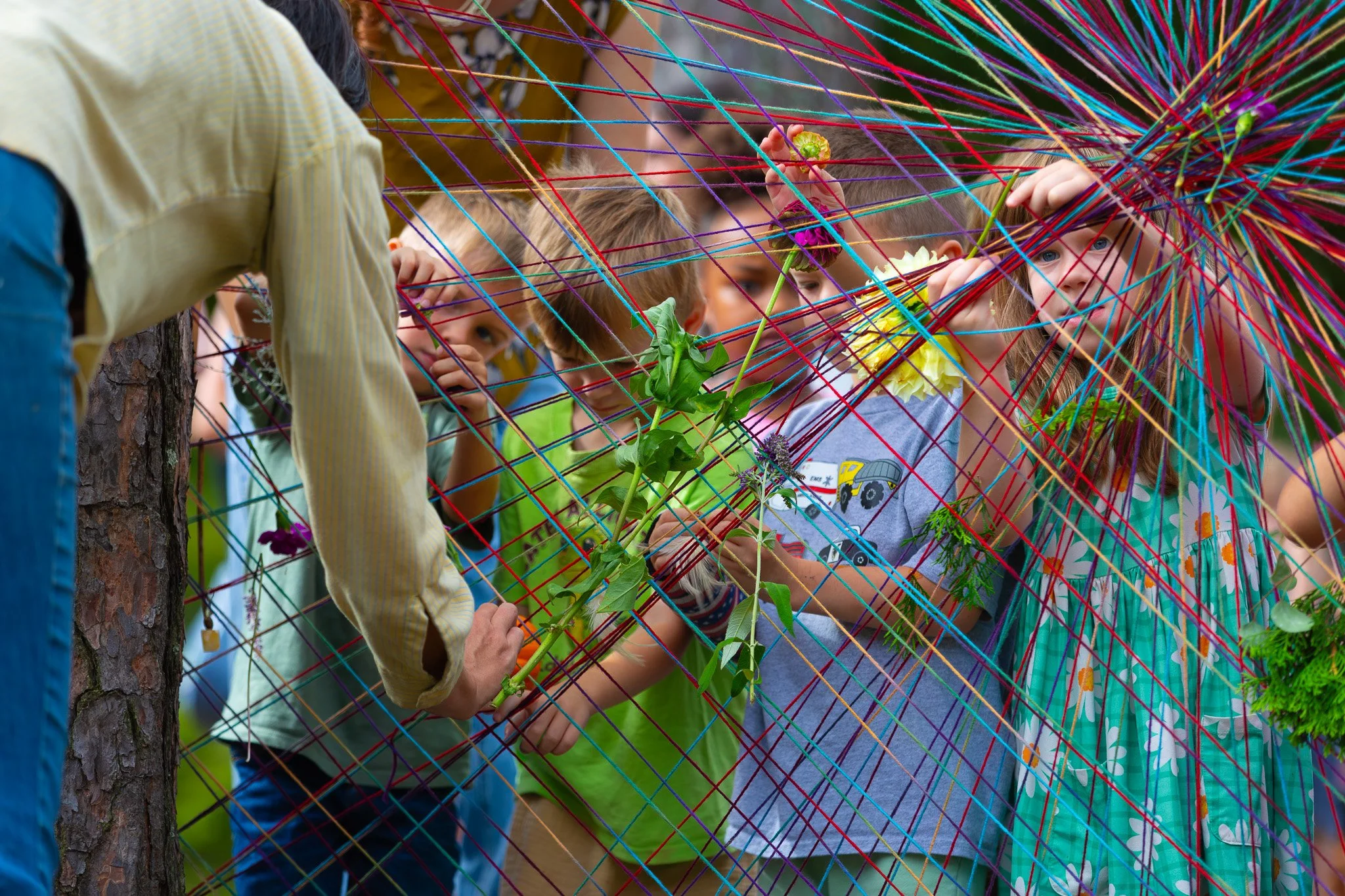
Nature also provides materials for artistic work. Students paint using walnut hulls for rich browns and pokeberries for vibrant colors, discovering firsthand that beautiful artistic materials exist all around us. When studying different cultures, they might make tea from herbs and share cups with one another, or work with wool that's been sheared, cleaned, and prepared for spinning and weaving.
This connection to the natural world isn't separate from academic learning—it's integrated throughout. Students write sentences about seasonal observations using inventive spelling, count and graph natural objects, use poems about springtime as literacy jumping-off points, and explore scientific concepts through direct observation and hands-on investigation. We teach students about the role of the natural world and help them develop both a strong sense of self and appreciation for our environment and planet.
-
We celebrate each student's unique perspective, skillset, and experience. Kindergarteners come to us as whole people with their own interests, ways of understanding the world, and developmental timelines. Our work is to honor all of who they are.
This commitment shows up in concrete ways. Some students arrive already reading while others are just beginning to recognize letters—both thrive here because our teaching is intentionally differentiated to meet each child where they are. When a student is fascinated by sharks or butterflies or the solar system, that curiosity becomes the foundation for their Independent Research Project. They're not assigned a topic—they choose what matters to them, and we take their questions seriously. Even in kindergarten, students are capable researchers whose interests and passions deserve deep exploration.
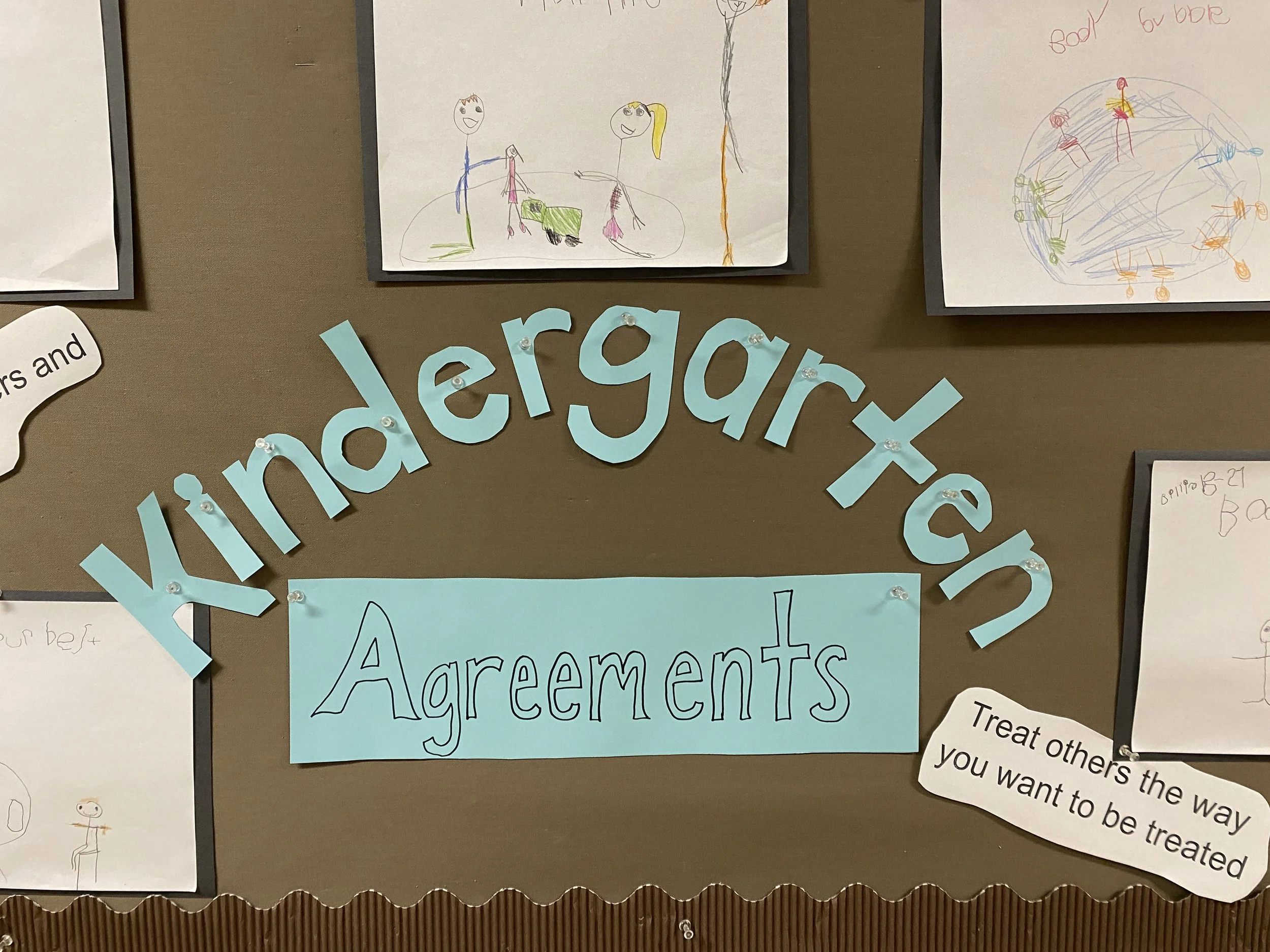
Student voice shapes the classroom itself. Early in the year, kindergarteners work together to create classroom agreements—and their contributions are thoughtful and generous. Past agreements have included "Be kind to ourselves," "Make people feel welcomed," "Help clean up," and "Be first-time listeners." These aren't rules imposed from above; they're commitments students make to each other, reflecting their own values and understanding of what community requires.
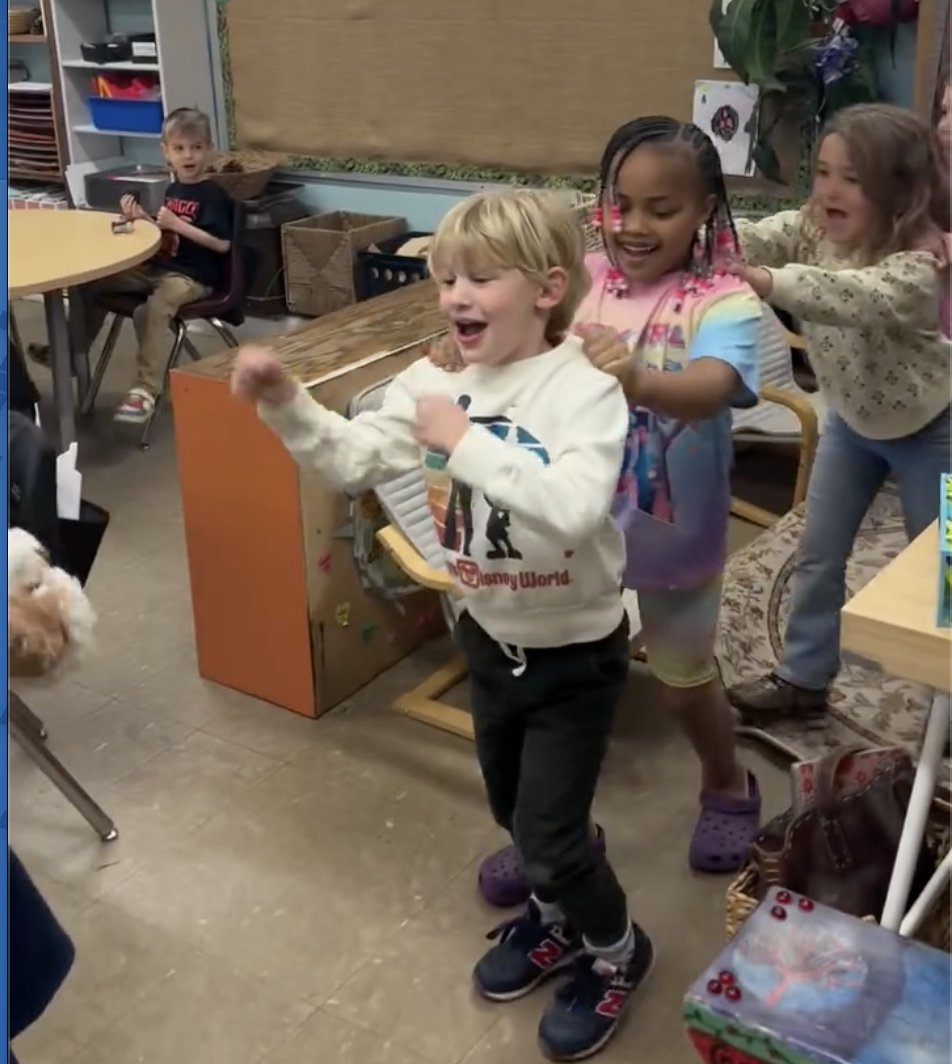
Connection extends across ages and stages. Kindergarteners have buddies among the seventh and eighth graders who join them for activities like Buddy Lunches where they share gratitudes together. These cross-age relationships honor where kindergarteners are developmentally while giving them access to older role models. The class often adopts rituals that evolve organically in response to what this particular group needs—a stuffed animal that visits different families each weekend, collaborative poetry projects like the "We Belong" poem, celebrations of the 100th Day of School where students reflect on their growth.
In April, kindergarteners participate in Student-Led Conferences—preparing to share their learning journey directly with their families. For five and six-year-olds to recognize and articulate their own growth, to reflect on what was challenging and what they're proud of, is powerful. It says: your perspective on your own learning matters. You are capable of understanding and expressing your own development.
-
Kindergarteners actively shape their classroom culture. Early in the year, students work together to create classroom agreements. Their contributions are thoughtful and generous—past agreements have included "Be kind to ourselves," "Make people feel welcomed," "Help clean up," and "Be first-time listeners." These aren't rules imposed from above; they're commitments students make to each other, reflecting their own values and understanding of community.
Connection extends beyond the classroom. Kindergarteners have buddies among the older students—seventh and eighth graders who join them for special activities like Buddy Lunches where they share gratitudes together. The class often adopts rituals that build connection—a stuffed animal that visits different families each weekend with students documenting their adventures, or other traditions that evolve organically in response to what this particular group needs.
Throughout the year, kindergarteners celebrate milestones together. The 100th Day of School becomes "100 DAYS SMARTER!"—a day to reflect on skills gained and growing confidence since those first nervous days of kindergarten. The collaborative "We Belong" poem they write together captures their understanding of community: "We belong when we feel part of the community. When we share, others feel happy. In our classroom, we are nice and kind to each other."
In April, kindergarteners participate in Student-Led Conferences—a wonderful opportunity for students to share about their learning and their school experience directly with their families. Students prepare by reflecting on their growth since the beginning of the year, gathering work that shows their progress, and practicing how they'll present their learning journey. It's powerful for five and six-year-olds to recognize and articulate their own growth.
The Kindergarten Day
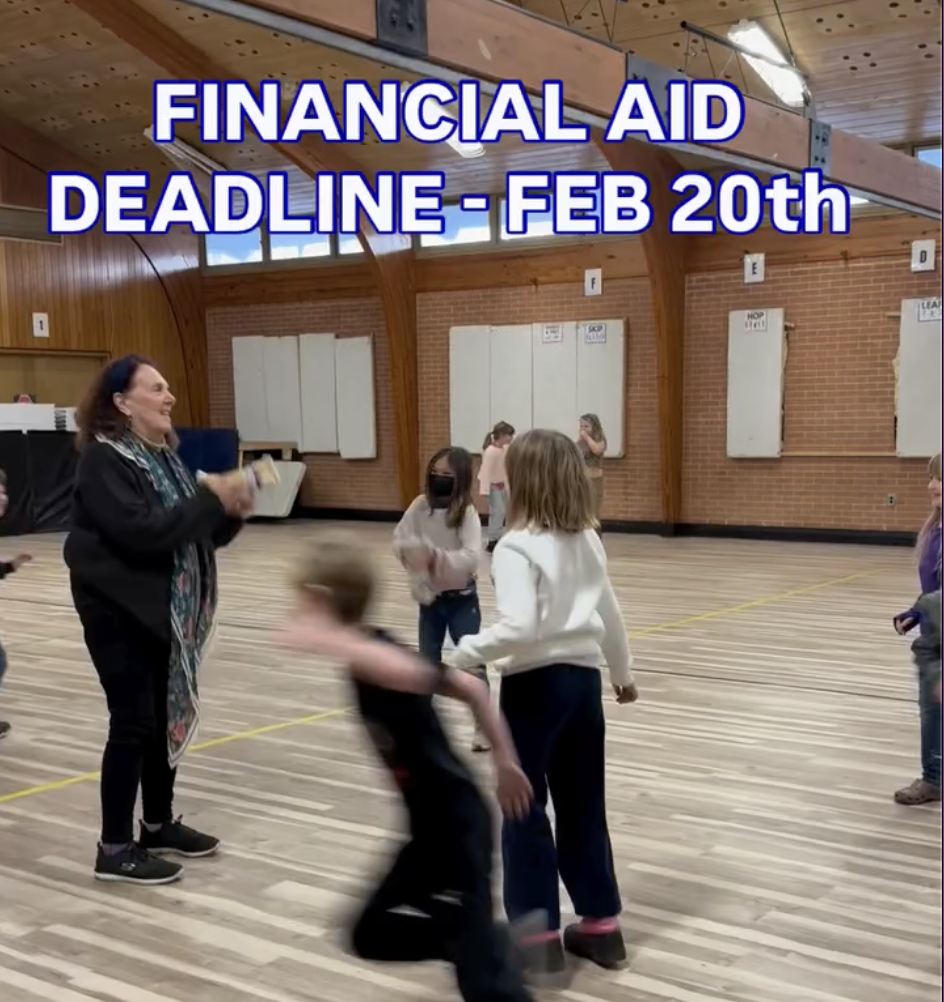
Kindergarten runs from 9:00 am to 3:00 pm, with before care and after care available for families who need them.
Every day includes time outside on our wooded playground, where children connect with nature and each other. Kindergarteners also attend weekly classes in Art, Music, and Physical Education, where they practice working as teammates, bandmates, and fellow artists. These specials deepen their understanding of the world while broadening their skillsets and giving them opportunities to share inspiration with peers.
Throughout the year, students take field trips that bring their learning to life and participate in celebrations and presentations that allow them to share their growing knowledge with families and the school community.

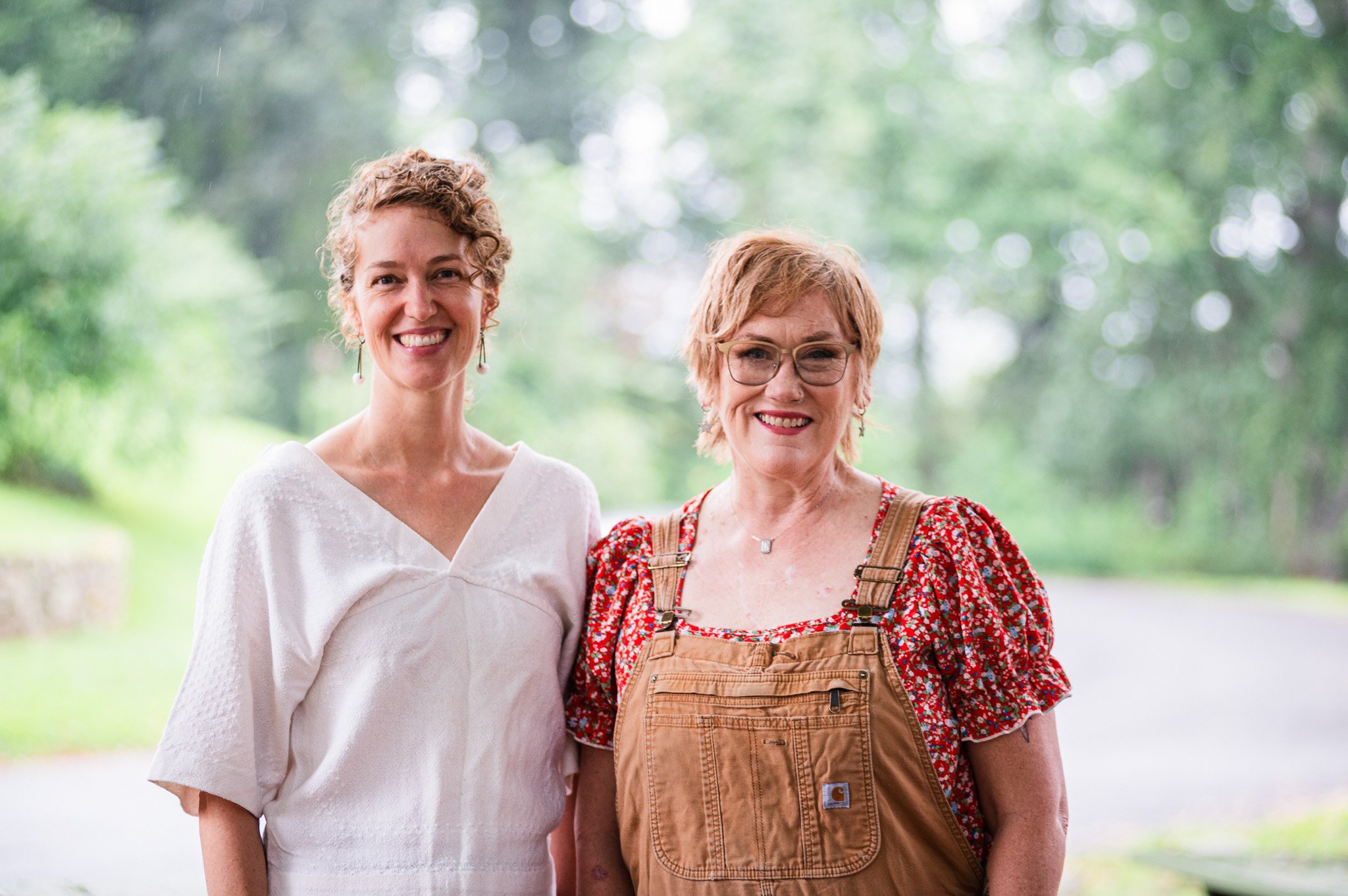
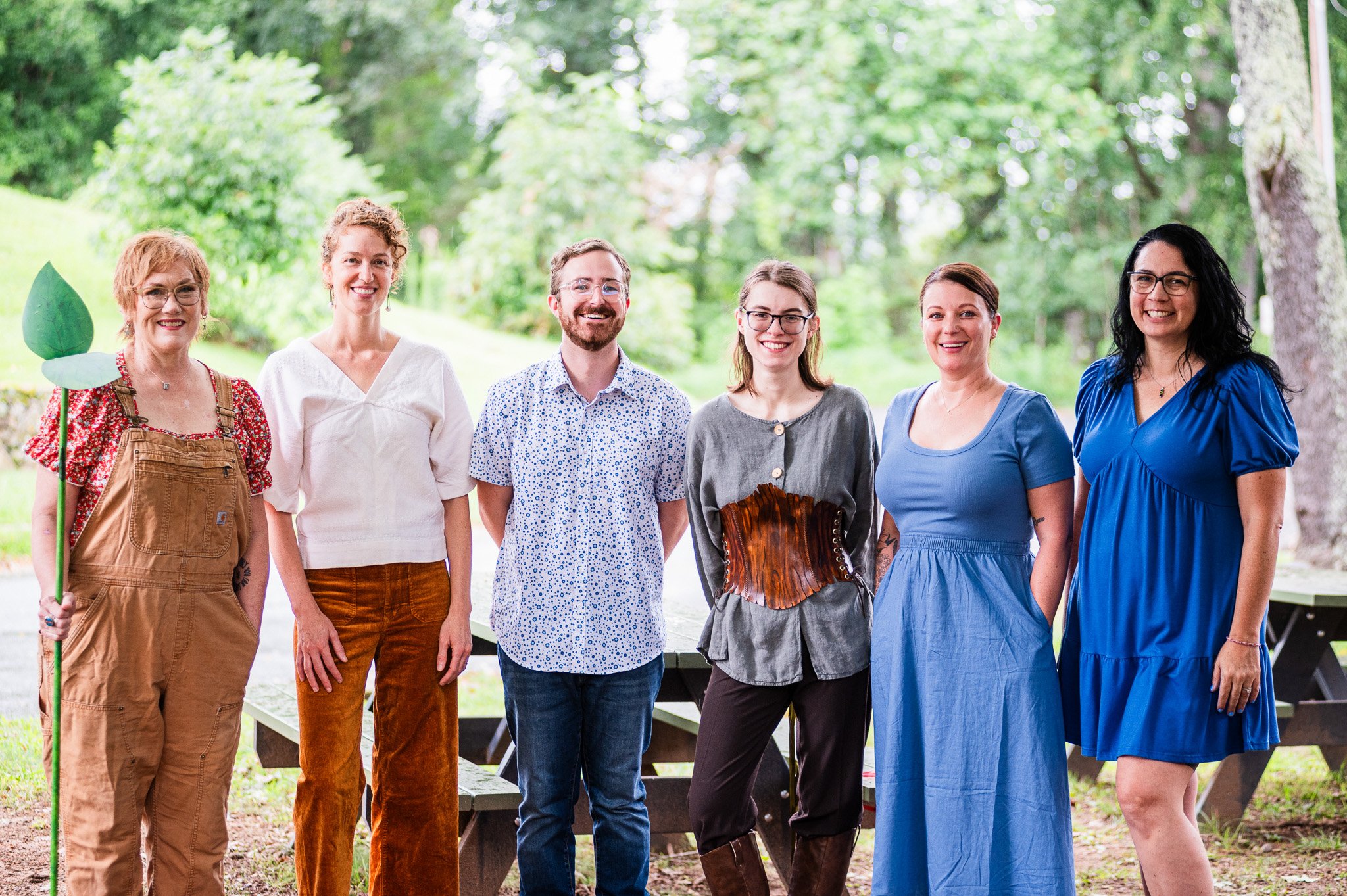
Meet the Kindergarten teachers
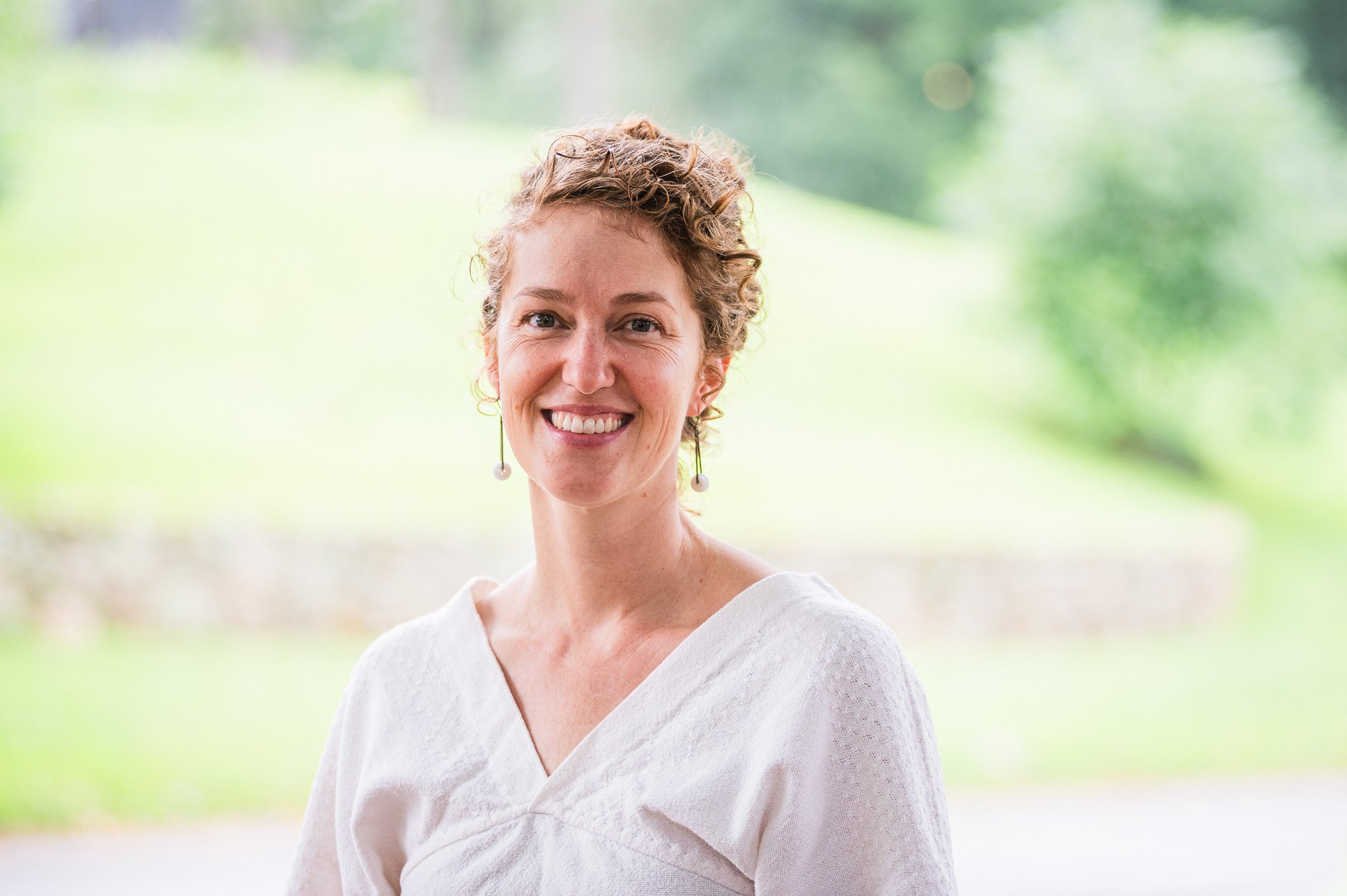
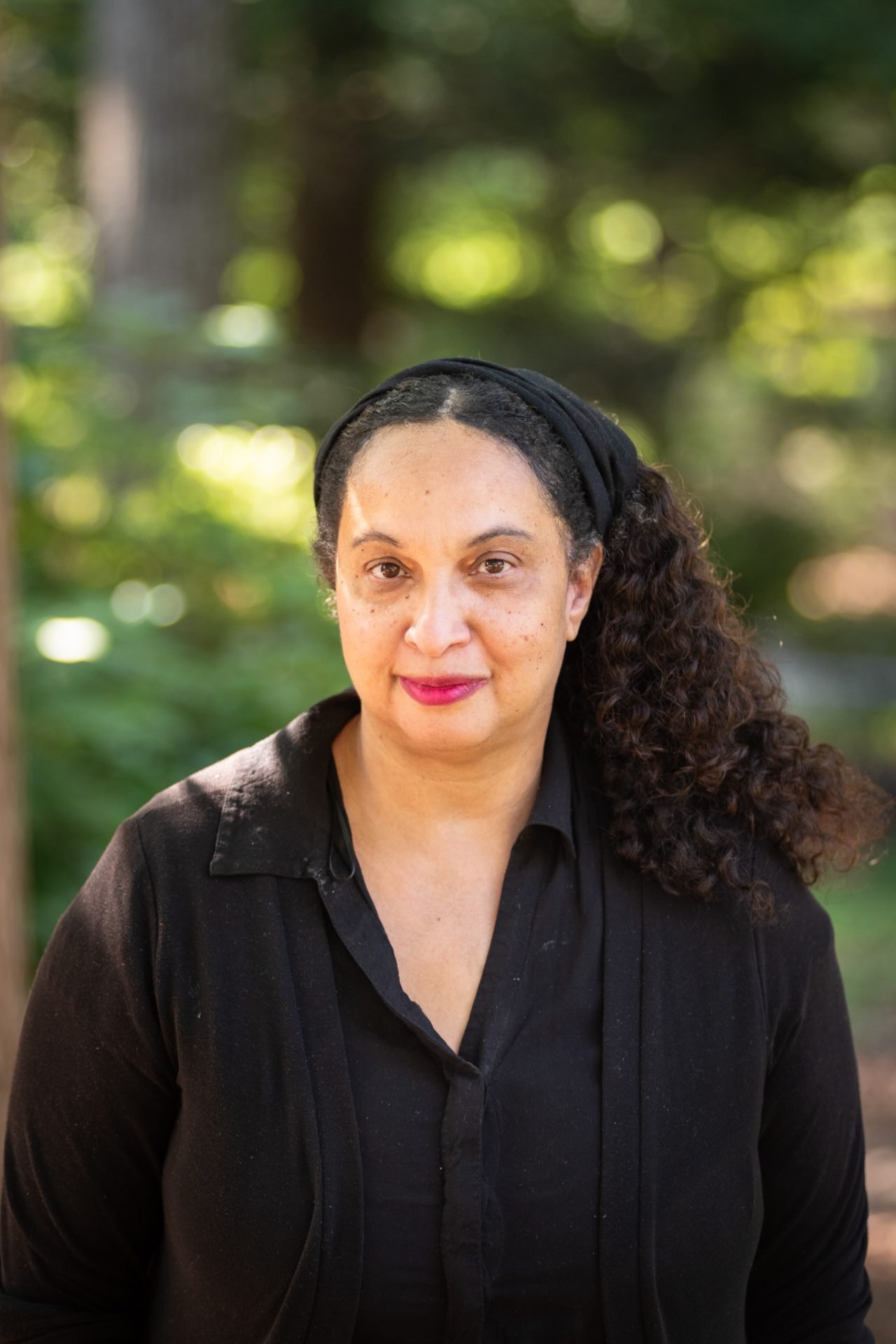
Cary Cooper
Lydia Hearne
-
Kindergarten Lead Teacher
Lydia earned her bachelor’s degree from Earlham College in 2005, and has worked in the field of early education ever since. She loves the connections made with children, and is excited about the tremendous learning that happens during these early years. In addition to her work with children, Lydia is also an artist. She attended Haywood Community College’s professional craft program, where her focus was in clay, but she also enjoys drawing, painting, and weaving. She grew up here in the mountains of Western North Carolina on a small farm. Some of the wool in her weavings comes from the sheep on her family’s farm! Lydia will bring aspects of her background and of these passions to her work at Odyssey’s Kindergarten.
-
Kindergarten teacher
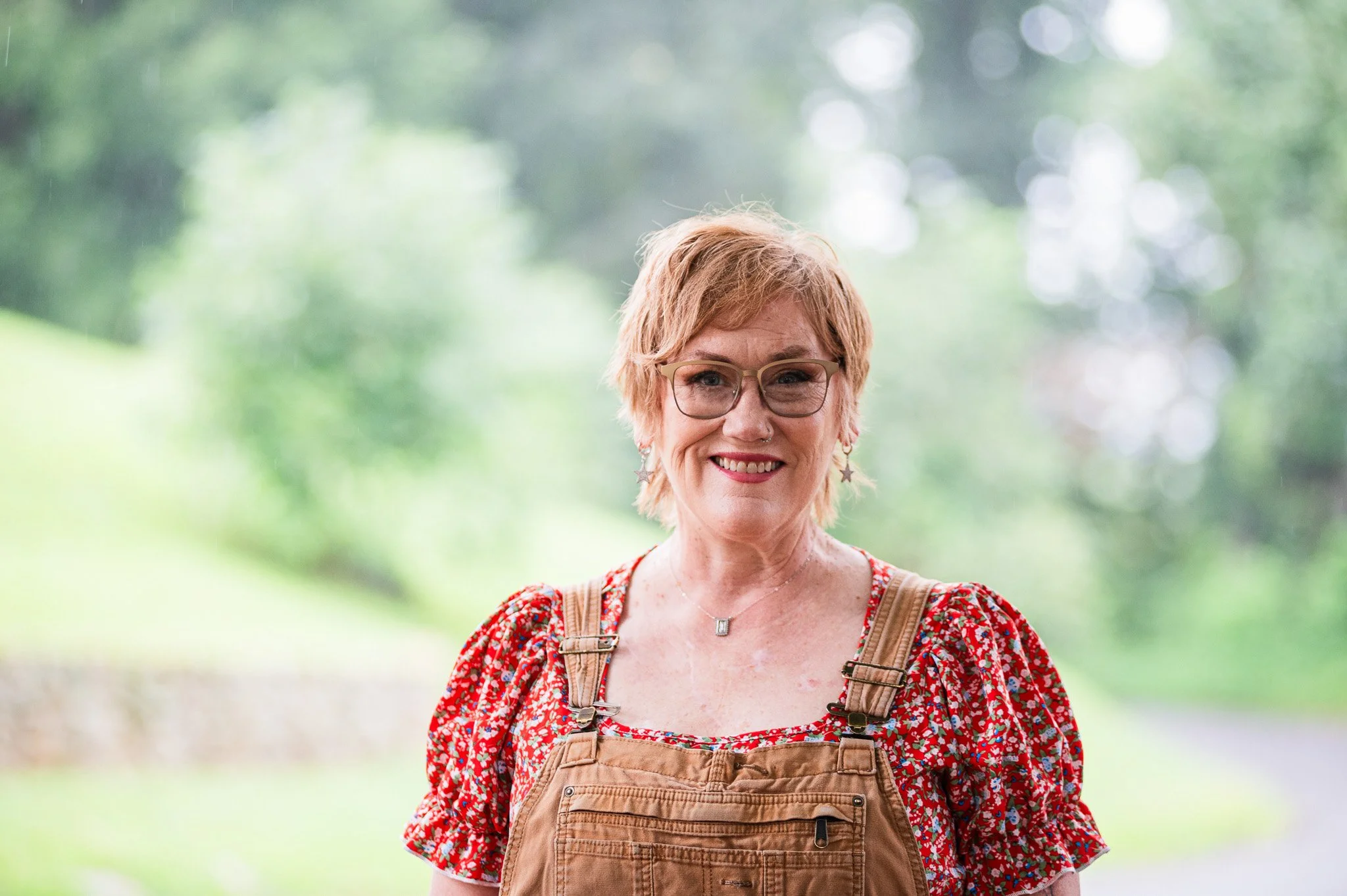
I'm Cary Cooper, Kindergarten Teacher. I began my teaching career in the late 90's in Texas teaching first grade in an ESL classroom for 3 years. I "retired" from teaching to have my own children, and discover my passion for writing songs. I toured as a singer-songwriter for 12 years and made my way back into teaching at White Rock Montessori in Dallas where I taught music for 5 years.
Upon moving to Asheville in 2014, I taught for 6 years at The Franklin School of Innovation and also taught Songwriting at Interlochen Arts Camp (in the summers) where I had the privilege of teaching 17 year old Chappell Roan! In my spare time, you can find me hiking the blue ridge parkway, writing new music in my tiny house on wheels or helping my eldest daughter plan her upcoming wedding!
In Loving Memory
The Kindergarten program was forever transformed by the work and passion of our longtime Kindergarten teacher, Shirley Rotolo. Her brilliance as an artist, her heart for justice and magic, and her innovation as an educator leave a legacy in our continuing program to this day. We are forever grateful for the wisdom, heart, friendship, and sparkle Shirley brought to our community.
Recent Kindergarten Updates

Curious? Come on a tour and see what sets us apart.
We would love to answer all of your questions and help you learn if Odyssey is right for your family. Fill out our tour inquiry form and we’ll find the time that’s right for you.