English Language Arts
PreK through 12th Grade
Program Overview
Pre-K thru 12: from building language to literary analysis
English Language Arts at Odyssey develops from pre-kindergarteners gathering objects from the woods and engaging in play for literacy activities, through elementary students learning to decode, to high schoolers analyzing formal logic in Transcendentalist essays. We're teaching students to read, write, and think clearly—and to care about books.
Our approach combines evidence-based instruction with individualized support. We use UFLI Foundations (a Science of Reading curriculum) because decades of research show explicit phonics instruction works for all readers. UFLI Foundations provides the systematic, explicit phonics instruction that research shows works for developing readers. This Science of Reading curriculum shares core principles with structured literacy approaches like Orton-Gillingham - systematic phonics, multisensory instruction, and explicit teaching of language structure - all proven effective through decades of cognitive science research.
We track progress through MAZE, ORF, and MAP assessments, then adjust instruction based on what we see. Our students consistently score in the top quartile nationally on reading assessments—third graders at the 80th percentile, fourth graders at the 78th, seventh graders at the 81st, high schoolers at the 75th.
The progression is deliberate: phonics foundations in first grade become fluent reading in third grade, which becomes literary analysis in seventh grade, which becomes sophisticated argumentation in high school. Each stage builds on the last while meeting students where they actually are. A third grader reading at fourth grade level while needing extra support in multiplication isn't "behind"—they're growing at their own pace. Reading is a tool, but it is also wonderful; our program helps each student find their own joy and love for it.
Jump to section:
The PreK-Elementary Foundation:
Building Fluent, Joyful Readers
Pre-Kindergarten: Language Through Play and Observation
Pre-kindergarteners use natural materials they've collected outdoors in literacy activities—connecting the physical world to letters and words. Through Bilingual Birdies Spanish program, students hear a second language through songs and stories. The outdoor space functions as a second classroom where vocabulary develops through observation: "acorn," "cardinal," "frost." By opening the world of language through play and exploration, our preschoolers become ready for Kindergarten and the technical skills to come.
Kindergarten: Learning to Read
Kindergarten is where students learn letter sounds, blend phonemes, and decode words—the technical foundations of reading.
At Odyssey, we teach these skills through UFLI Foundations, a structured literacy program grounded in decades of reading research. This isn't memorization or guessing from pictures. It's teaching students how letters and sounds actually work together so they can read independently. And this technical work happens alongside daily engagement with story, mythology, and meaning-making—because reading is both a skill to master and a doorway to ideas.
What This Looks Like in Practice:
Watch a kindergartener decode their first word and you'll see exactly how UFLI works. They tap out the sounds with their fingers—/c/ /a/ /t/ for "cat"—connecting each sound to a letter. This sound-tapping helps young brains understand that words are made of individual sounds, and each sound has a letter (or letters). Within weeks of starting kindergarten, students are reading their first books—not by memorizing words as shapes, but by actually decoding them.
The program follows a carefully researched sequence, introducing one concept at a time and practicing it thoroughly before moving on. Students learn letter sounds, then combine them into simple words like "at" and "am." They practice blending sounds together, use letter tiles to build words, and read short texts made entirely of patterns they've already learned. Every lesson includes multiple types of practice—seeing letters, hearing sounds, moving their hands, reading connected text—because research shows children learn best when multiple pathways are engaged.
By the end of kindergarten, students can decode unfamiliar words systematically, read decodable books with growing confidence, and are building the foundation for fluent reading.
“Heart Words”: A Stronger Approach Than "Sight Words"
You may have heard debates about "sight words" versus phonics. UFLI uses something different: heart words. Here's why that distinction matters.
Traditional sight word instruction asks children to memorize words as whole shapes: look at "the," remember what "the" looks like, recognize it next time. But this approach doesn't necessarily teach children how to read—it teaches them to memorize specific words, which doesn't explicitly help when they encounter a word they've never seen before.
UFLI teaches kindergarteners to decode what they can and mark what they can't.
Example: the word "said"
Students tap the sounds they hear: /s/ /ĕ/ /d/
They CAN decode the "s" and "d" using patterns they know
But "ai" isn't playing fair—it's saying /ĕ/ instead of /ā/
So they place a small heart on the "ai" part: "This part I learn by heart"
Students aren't memorizing random word shapes. They're learning exactly which letters follow the rules and which don't—which means they're building real decoding skills that transfer to new words, not just memorizing a list that doesn't grow.
Kindergarten introduces 56 heart words (words like "the," "said," "they," "could," "because"), but students learn them through understanding, not rote memorization.
Reading Real Books From the Start
Kindergarteners read books within weeks of starting school. These aren't books they've memorized or guessed from pictures—they're decodable texts made of the exact letter patterns students have learned. When a kindergartener reads "The cat sat on the mat," they've decoded every word using the skills they've practiced. This builds genuine confidence because students know they're actually reading, not performing a trick.
What Kindergarten ELA Includes
Systematic phonics through UFLI Foundations—letter sounds, blending, decoding practice
Sound-tapping and hands-on letter work
Heart word instruction for irregular high-frequency words
Decodable books students can actually read
Daily read-alouds from diverse authors
Campbell mythology connecting ancient stories to students' lives
Early writing through drawing, invented spelling, and storytelling
First Independent Research Projects on topics students choose
In April, kindergarteners lead conferences where they show their families what they've learned: "At the beginning of the year I didn't know any letters, and now I can read this book!" Five- and six-year-olds can see their own growth clearly because the progress is concrete and measurable.
Why This Matters
Learning to read is one of the most important things that happens in kindergarten. We use UFLI because it works—research shows structured, systematic phonics instruction is the most effective approach for teaching all children to read, including those who struggle. Our students don't just memorize a few dozen words; they learn how reading actually works. That foundation serves them through every grade level that follows.
Grades 1-2: Building Reading Fluency
First and Second grade is where students learn to read fluently. They decode independently, comprehend what they read, and start choosing books for pleasure.
UFLI Foundations provides the systematic, explicit phonics instruction that research shows works for developing readers. This Science of Reading curriculum shares core principles with structured literacy approaches like Orton-Gillingham—systematic phonics, multisensory instruction, and explicit teaching of language structure—all proven effective through decades of cognitive science research. The program from the University of Florida teaches students how to decode and spell words. It's research-based (built on decades of literacy science) and evidence-based (free curriculum with broad adoption showing results).
The 1-2 literacy curriculum includes:
Phonics through structured, explicit lessons building decoding skills
Word Study exploring patterns, spelling rules, and word families
Language Study for grammar and sentence structure
Book Study building comprehension and literary analysis foundations
Handwriting including introduction to cursive
Writing Workshop using The Writing Revolution methodology, where students begin with sentence-level skills and progress to paragraph and report writing, alongside free creative writing
Students work with texts that reinforce their emerging fluency while building genuine enthusiasm for books. Classroom libraries feature diverse authors and story characters, constantly updated to include both relevant contemporary works and classic children's literature.
Studio Thematic Units integrate literacy across subjects:
Community understanding through reading and research
Bird study with ornithology texts and field observations
Cultures Around the World through stories and celebrations
90 Second Newbery (literature and storytelling)
Movements Toward Equity (age-appropriate social justice history)
Ancient Egypt (early civilizations through historical texts)
Independent Research Projects (student-choice deep dives)
By the end of second grade, students are fluent readers who can decode unfamiliar words independently, comprehend what they read, and express ideas in writing with growing sophistication.
Grades 3-4: Independent Reading and Writing
UFLI Foundations continues through 3-4, ensuring students master NC Standards for reading foundations and beyond. The program's explicit instruction helps every student—whether they need foundational support or extension challenges—develop both technical skill and enthusiasm for reading.
Third and fourth grade marks the shift from learning to read to reading to learn. Students read independently, choose books for pleasure, analyze stories, and write across multiple genres.
Two-Year Novel Cycles ensure that students in mixed-grade classrooms never repeat content. Throughout two years, students read and discuss novels like:
Judy Moody Was in a Mood
Ways to Make Sunshine
Love That Dog
Where the Mountain Meets the Moon
The Vanderbeekers and the Hidden Garden
Each year features a completely different book list, so returning students always encounter fresh literature that challenges them in new ways.
Two Year Cycles
Informative writing - research-based reports, explanatory texts
Narrative writing - personal stories, fiction, creative projects
Opinion writing - persuasive essays, argumentative pieces
Writing develops across three types:
Assessment is transparent and multi-layered:
MAZE assessments (reading comprehension screening)
Oral Reading Fluency (ORF) checks
MAP (Measures of Academic Progress) national assessment
Daily informal assessment for flexible grouping and support
Third graders score at the 80th percentile nationally in reading on MAP assessments. Fourth graders score at the 78th percentile. These results confirm what teachers observe daily: the mixed-grade structure, systematic phonics instruction, and emphasis on both skill and joy creates confident, capable readers.
Students also pursue Independent Research Projects, conducting research, writing essays, and preparing presentations on topics ranging from marine biology to musical instruments to video game design. This six-week intensive (January through mid-February) teaches research skills, source citation, essay writing, and public speaking—all while celebrating each child's unique curiosity.
The Middle School Transition:
Reading to Think
Grades 5-6: Sophistication and Strategy
Fifth and sixth grade is where reading becomes a tool for understanding complexity. Students develop sophisticated comprehension strategies, expand vocabulary systematically, and write with increasing purpose and craft.
Reading instruction focuses on:
Determining theme and main idea in both fiction and informational texts
Making inferences and reading between the lines
Analyzing author's craft and literary technique
Vocabulary development becomes systematic:
Morphology (word structure and meaning)
Prefix and suffix analysis
Latin and Greek roots
Word-attack strategies for determining meaning of unfamiliar words
Writing spans three major types:
Creative/Narrative - fiction, personal narrative, descriptive writing
Research/Informative - including IRP essays with proper source citation
Persuasive - argument construction, claim and evidence
Novel studies by grade level:
Fifth Grade examples:
Holes by Louis Sachar
The Phantom Tollbooth by Norton Juster
Brown Girl Dreaming by Jacqueline Woodson
Sixth Grade examples:
The Westing Game by Ellen Raskin
Brown Girl Dreaming by Jacqueline Woodson
The Giver by Lois Lowry
The intentional overlap (Brown Girl Dreaming appears in both) allows for deeper discussion across grade levels while maintaining distinct reading experiences through different companion texts.
Assessment
Assessment shows strong results with high MAP scores, with the fifth grade scoring at the 80th percentile nationally in reading, and sixth scoring at the 62nd.
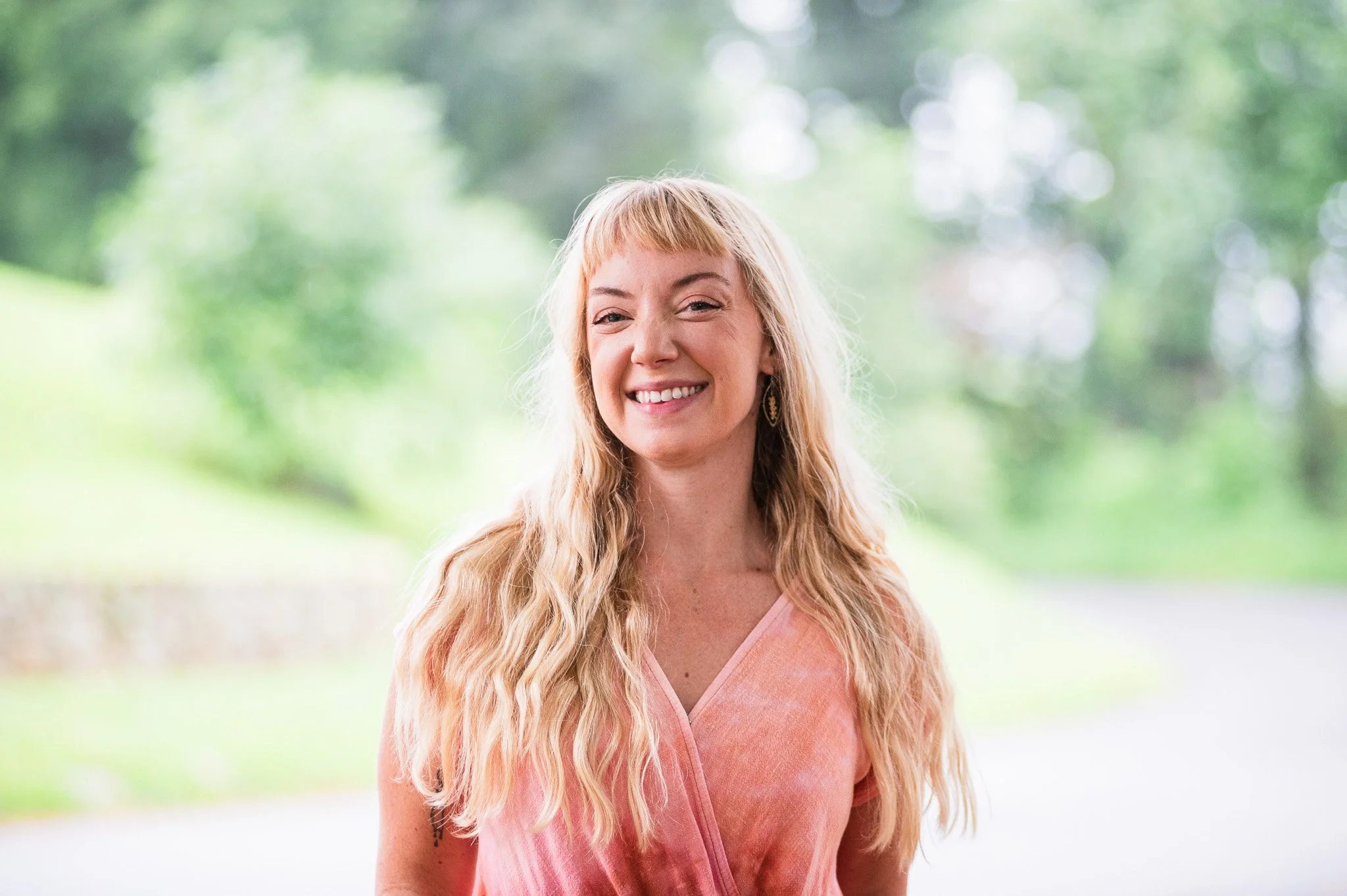
Maggie Braswell
Maggie Braswell teaches Odyssey's English Language Arts and Social Studies for grades 5 and 6. Learn more about Maggie here.
Grades 7-8: Integrated Humanities and Academic Discourse
Seventh and eighth grade marks a fundamental shift: ELA and Social Studies integrate throughout both semesters. Students no longer study literature separately from history—they're reading historical fiction that brings the past to life while developing sophisticated analytical skills.
Seventh Grade
Seventh graders study modern World History and read historical fiction relevant to each unit. These include:
The Partition of India and the creation of the independent nations of India and Pakistan in the 1940s
Life in Germany following WW2, specifically East Berlin, in the 1960s
The HIV/AIDS epidemic in Kenya in the 1980s
The separation of the Korean Peninsula into North and South Korea, and life in North Korea in the 1990s
Eighth Grade
Eighth graders study US History and read historical fiction alongside occasional narrative nonfiction. Stories of immigration, industrialization, civil rights movements, and American experience come alive through carefully chosen texts that honor complexity.
The Harkness Method
Assessment
The Harkness Method shapes classroom discussion. Students sit in a circle or around a table, and the conversation belongs to them—not only the teacher. They learn to:
Find and articulate their unique voices
Substantiate perspectives through textual references
Respect differing points of view
Practice active listening and thoughtful participation
This approach prepares students for high school seminars while teaching them that rigorous thinking happens in community, through respectful disagreement and collaborative meaning-making.
Seventh graders score at the 81st percentile nationally in reading (MAP)
Eighth graders score at the 71st percentile nationally in reading (MAP)
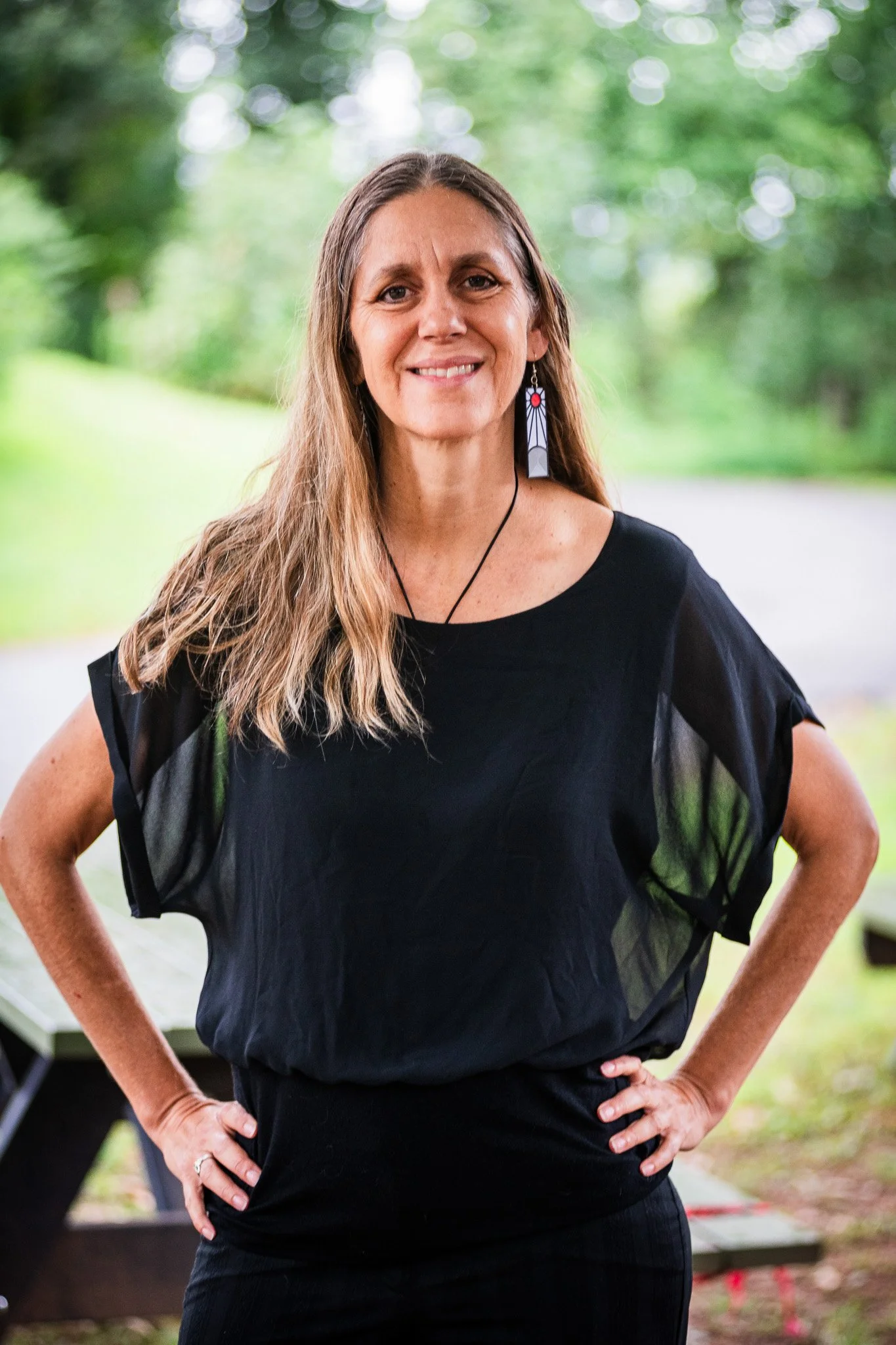
Amy Glenn
Amy Glenn teaches Odyssey's integrated ELA and Social Studies curriculum, focusing on US History and World History for seventh and eighth graders. She has been at Odyssey since 2021. Learn more about Amy here.
High School at Odyssey
English Language Arts
Grades 9-12: Literary Analysis and Intellectual Independence
High school English at Odyssey combines rigorous reading with authentic engagement.
Students analyze complex texts, write across genres, and develop their own thinking rather than parroting expected answers. Classes are small enough for real discussion—a ninth grader's question about self-reliance can lead the group into Emerson and Thoreau, then pivot to formal logic to test the argument's validity.
Gabe Johnson has taught high school English at Odyssey for thirteen years. He brings expertise in symbolic logic and sentence diagramming—technical tools that help students see how language actually works. Students learn to identify logical fallacies, build sound arguments, and distinguish between persuasive writing and rigorous thinking.
American Literature explores what it means to be American through voices often left out of traditional canons. Students encounter:
Native American literature - myths, poems, short stories from Indigenous authors
Cherokee mythology - connecting to local Western North Carolina Indigenous history
American Transcendentalism - Emerson, Thoreau, self-reliance and individualism
Harlem Renaissance - analyzing meter, rhyme scheme, and cultural context
Students don't just read these texts—they analyze them using literary theory they select themselves. One student might examine Their Eyes Were Watching God through a feminist lens while another explores colonial power dynamics. The goal isn't to arrive at a single "correct" interpretation but to think rigorously, support claims with evidence, and recognize that meaningful questions rarely have simple answers.
American Literature (Grades 9-10)
Modern Literature (Grades 11-12)
Modern Literature explores complexity, ambiguity, and the fractured modern world. Students read:
The Metamorphosis by Franz Kafka
Poetry by ee cummings, T.S. Eliot, William Carlos Williams
Their Eyes Were Watching God by Zora Neale Hurston
Additional contemporary and classic works
Students write analysis essays, create collaborative projects, and practice the kind of close reading that college professors expect. They learn that literature isn't about finding hidden meanings the teacher already knows—it's about asking questions worth pursuing, building arguments that hold up under scrutiny, and recognizing that interpretation requires both creativity and discipline.
Assessment and Outcomes
High school students score in the 75th percentile nationally in reading (MAP). More importantly, they leave as independent thinkers who know how to learn—who tackle unfamiliar texts, ask meaningful questions, and persist through intellectual challenges.
What Odyssey English graduates can do:
Analyze complex arguments and identify logical fallacies
Write clearly across multiple genres (analysis, narrative, persuasive, technical)
Read difficult texts with persistence and comprehension
Engage respectfully in difficult conversations about literature and ideas
Understand that rigorous thinking requires both creativity and discipline
Recognize their own perspectives while considering others
Use textual evidence to support interpretations
Appreciate that meaningful questions rarely have simple answers
Excel in college-level programs and enjoy an entire world of reading beyond the classroom
Cross-Curricular Connections
English doesn't exist in isolation. Students in American Environmental History (11th-12th grade, taught by hadley sinclair cluxton) explore frameworks like nature/civilization, nature/gender, nature/race through both historical analysis and literary texts. Writing happens across all disciplines—lab reports in science, research papers in history, reflective essays after OSL experiences.
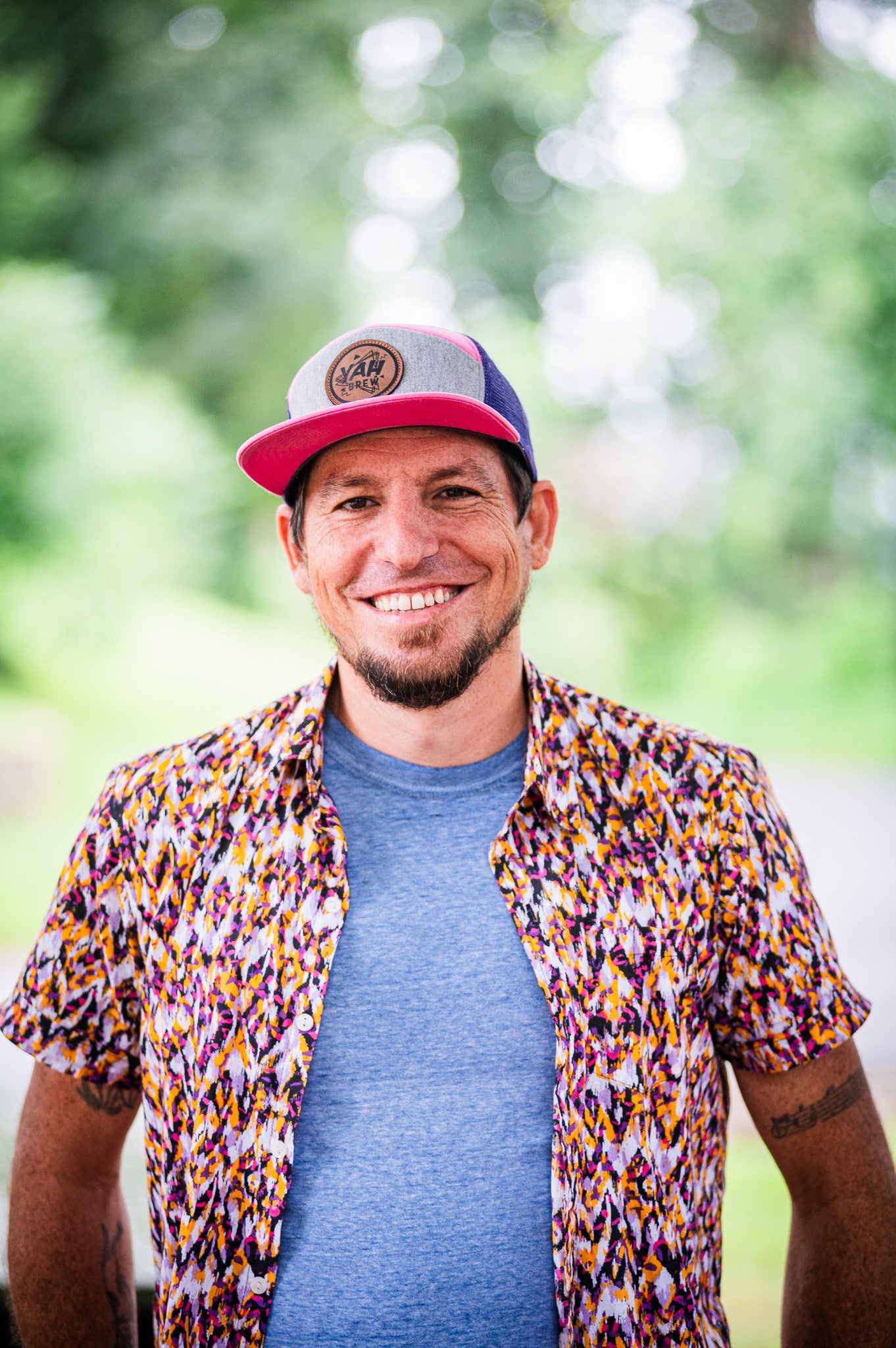
Gabe Johnson
Gabe Johnson teaches American Literature (9-10) and Modern Literature (11-12), runs Tater Knob Farm outside of Asheville, and has been at Odyssey since 2012. Learn more about Gabe here.
Deeper Context and FAQs
UFLI Foundations: Our K-4 Reading Program
What is UFLI?
UFLI Foundations (University of Florida Literacy Institute Foundations) is a comprehensive K-4 reading curriculum developed by researchers at the University of Florida. It's an open-source, evidence-based program explicitly designed to align with the Science of Reading—decades of research from cognitive science, neuroscience, and linguistics showing how the brain learns to read.
UFLI is free, research-backed, and has been adopted by schools nationwide because it works. At Odyssey, we use UFLI from Kindergarten through 4th grade as the foundation of our literacy instruction.
The Science of Reading Connection
Structured Literacy and Orton-Gillingham Principles
How UFLI Works in Practice
Why Odyssey chose this program
The (Measurable) Results
The Science of Reading isn't a program or method—it's the body of research proving that reading must be explicitly taught through systematic phonics. The brain isn't wired to read automatically; children need direct instruction in how letters represent sounds, how sounds combine into words, and how to decode unfamiliar text.
UFLI Foundations implements this research by teaching:
Phonological awareness - recognizing and manipulating sounds in spoken language
Phonics - systematic, explicit instruction in letter-sound relationships
Decoding skills - strategies for sounding out unfamiliar words
Encoding (spelling) - connecting sounds to written letters
Fluency - building automatic word recognition
Vocabulary and comprehension - understanding what's read
UFLI follows structured literacy principles—the instructional approach proven effective for all readers, including those with dyslexia. These principles align closely with the Orton-Gillingham methodology developed in the 1930s-40s for teaching students with reading difficulties.
Core principles UFLI shares with Orton-Gillingham:
Systematic and sequential - skills taught in a logical order, building on previous learning
Explicit instruction - teachers directly teach concepts rather than expecting discovery
Multisensory learning - engaging visual, auditory, and kinesthetic pathways (like sound-tapping)
Diagnostic and prescriptive - instruction adjusts based on student progress
Cumulative - concepts reviewed and reinforced continuously
What decades of clinical observation revealed through Orton-Gillingham, modern neuroscience confirmed through the Science of Reading. UFLI brings both together in an accessible, well-sequenced curriculum.
Kindergarten: Students learn letter sounds, practice phoneme blending and segmentation, and use sound-tapping (touching fingers for each sound) to make abstract phonemes concrete. They decode simple CVC words (consonant-vowel-consonant like "cat" or "sit") and begin building fluency with high-frequency words.
1st-2nd Grade: Students master more complex phonics patterns—consonant blends, digraphs (sh, ch, th), vowel teams (ai, ee, oa). They learn syllable types, practice multisyllabic decoding, and build automatic word recognition. Writing and spelling instruction mirror reading skills, reinforcing the sound-symbol connections.
3rd-4th Grade: Students refine decoding with advanced patterns (prefixes, suffixes, root words), develop fluency with increasingly complex text, and strengthen spelling through morphology. They transition from "learning to read" to "reading to learn," applying decoding skills to access content across subjects.
We selected UFLI Foundations for several reasons:
1. Research-backed - Built on 50+ years of reading science, not trends or philosophies
2. Evidence-based - Free, widely adopted curriculum with proven results across diverse student populations
3. Comprehensive - Covers all essential literacy components K-4
4. Flexible - Works within our small, differentiated classrooms where students work at individual levels
5. Transparent - Open-source materials allow teachers to understand the progression deeply
6. Effective - Our students consistently score in the top quartile nationally on reading assessments
We also appreciate that UFLI doesn't require expensive proprietary materials or scripted lessons that remove teacher judgment. Our teachers use UFLI's solid structure while maintaining the flexibility to meet individual student needs—which is essential in our mixed-grade classrooms.
Our transparent approach to assessment shows UFLI works:
3rd graders: 80th percentile nationally (MAP reading assessment)
4th graders: 78th percentile nationally (MAP reading assessment)
5th graders: 80th percentile nationally (MAP reading assessment)
7th graders: 81st percentile nationally (MAP reading assessment)
More importantly, students become confident, enthusiastic readers beyond what a test can measure. They can decode unfamiliar words independently, comprehend what they read, and choose books for pleasure. The systematic foundation UFLI provides in early elementary pays dividends through middle school and high school, where students tackle complex texts with the decoding skills to access them.
For Parents Researching Reading Programs
If you're researching Science of Reading approaches, structured literacy programs, or Orton-Gillingham methodology—UFLI Foundations delivers on all three. It's not a "balanced literacy" or "whole language" approach; it's explicit, systematic phonics instruction proven effective for all learners, including those with dyslexia or other reading challenges.
We track progress through MAZE assessments (reading comprehension screening), Oral Reading Fluency checks, and national MAP assessments, adjusting instruction based on what students need. Small class sizes mean no student disappears in the middle—if a kindergartener needs more sound-tapping practice or a third grader is ready for multisyllabic challenge words, teachers adjust immediately.
Parents are welcome to observe UFLI lessons during school tours to see this instruction in action.
Why This Literacy Approach Works
Research-Based Foundations Meet Student-Centered Learning
The (Measurable) Results
We use UFLI Foundations (K-4) because the Science of Reading shows that systematic, explicit phonics instruction gives every student the tools to decode independently. We track progress through MAZE, ORF, and MAP assessmentsbecause transparency matters—families deserve to know how students are growing, and teachers need data to adjust instruction thoughtfully.
But we also know that no program, however well-designed, replaces the relationship between a teacher who knows a student deeply and that student's growing understanding of themselves as a learner. That's why our mixed-grade classrooms keep students with teachers for two years. That's why we assess daily, informally, and adjust flexibly. That's why we honor student choice in IRPs and respect their interpretations in literature discussions.
Our transparent approach to assessment shows UFLI works:
3rd graders: 80th percentile nationally (MAP reading assessment)
4th graders: 78th percentile nationally (MAP reading assessment)
5th graders: 80th percentile nationally (MAP reading assessment)
7th graders: 81st percentile nationally (MAP reading assessment)
More importantly, students become confident, enthusiastic readers beyond what a test can measure. They can decode unfamiliar words independently, comprehend what they read, and choose books for pleasure. The systematic foundation UFLI provides in early elementary pays dividends through middle school and high school, where students tackle complex texts with the decoding skills to access them.
The Odyssey Perspective on Why and How
Small Classes, Deep Knowing, High Expectations
Classes stay small enough that teachers know each student's thinking, challenges, and gifts. When a teacher has worked with a student for two years, they understand not just where that student is academically, but how they learn, what motivates them, what they're afraid of, and what they're ready to tackle next.
This deep knowing allows for genuinely individualized instruction—not differentiation as checkbox, but differentiation as relationship. A third grader reading at fourth grade level while needing multiplication support isn't "behind." A sixth grader who struggles with decoding but grasps complex themes isn't "low." They're whole humans with spiky profiles, and we meet them where they are while holding them to high expectations rooted in dignity.
Mixed-Grade Structure Creates Natural Scaffolding
Our shared-grade classrooms aren't just about combining ages—they create a learning environment where students benefit from peer modeling and leadership opportunities. Younger students learn from observing older classmates. Older students deepen understanding by teaching and mentoring. Everyone experiences being both the newest learner and the confident leader.
Research consistently shows that multi-age classrooms support social-emotional development, reduce competition, and increase collaboration. In literacy specifically, this means emerging readers see what fluent reading looks like daily. Struggling writers watch peers revise thoughtfully. Students who love books share recommendations across grade levels. The mixed-grade structure creates what psychologists call a "zone of proximal development" that's naturally responsive to where students actually are.
Two-Year Curriculum Cycles Prevent Repetition
Because students stay in mixed grades for two years, we design two-year curriculum cycles ensuring no student repeats content. Third graders read different novels than returning fourth graders. Fifth graders explore different Studio units than returning sixth graders. This structure respects students' time and intelligence while allowing teachers to go deep rather than covering the same material shallowly year after year.
Whole-Child Integration Through Six Strands
English Language Arts at Odyssey activates all Six Strands:
Mental - critical thinking, analysis, argument construction
Emotional - connecting to characters, processing feelings through writing
Moral - examining ethical questions in literature, understanding multiple perspectives
Aesthetic - appreciating beautiful language, crafting elegant sentences
Physical - the embodied experience of reading aloud, dramatic performance
Spiritual - searching for meaning, asking "what makes a good life?"
When kindergarteners present IRPs on topics they've chosen, when third graders write opinion pieces about justice, when high schoolers analyze Thoreau's Civil Disobedience alongside current events—literacy instruction connects to how students think about themselves and the world.
The Questions Parents Ask
"My child is already reading. Will they be bored?"
No. Our differentiated approach means advanced readers get extension challenges while students who need foundational support get it without stigma. Third graders reading at fourth grade level participate in the same novel discussions as their classmates while working on more sophisticated vocabulary and writing challenges. High school students reading at college level analyze texts using literary theory they select themselves. There's always a next edge to reach.
"My child struggles with reading. Will they catch up?"
We meet students where they are with systematic, evidence-based instruction that builds confidence alongside skill. UFLI Foundations (K-4) gives explicit phonics instruction proven to help struggling readers crack the code. Daily informal assessment means teachers adjust instruction constantly, not just at report card time. Small class sizes mean no student disappears in the middle. And our assessment data shows it works: students score consistently in the top quartile nationally because the structure creates space for genuine growth.
"How do you balance standardized test prep with actual learning?"
We don't teach to tests—we teach toward durable skills, critical thinking, and genuine love of reading. Then we assess transparently using tools like MAP to confirm what teachers already know from daily observation. Our students score in the 75th-81st percentile nationally in reading not because we drill test-taking strategies, but because they're actually good readers who understand what they read, think critically about texts, and know how to learn.
"What about college preparation?"
Odyssey graduates enter college as confident writers and sophisticated thinkers. They've analyzed complex texts, constructed arguments, written across genres, and learned that rigorous thinking happens in community through respectful disagreement. College professors consistently report that Odyssey graduates arrive with better critical thinking skills, stronger work habits, and more genuine intellectual curiosity than many of their peers. 91% of our graduates receive merit scholarship offers, and 90% of those offers are for multiple years—colleges recognize students who can think, not just students who can test.
Learn More
Curious? Come on a tour and see what sets us apart.
We would love to answer all of your questions and help you learn if Odyssey is right for your family. Fill out our tour inquiry form and we’ll find the time that’s right for you.